The best part of fishing has never been about what’s on the end of the line. It’s the pursuit, the adventure and the chance to spend a little time in places where the rest of the world doesn’t demand quite so much attention. Early mornings on the water, finding the fish and enjoying everything that comes with a good day outdoors.
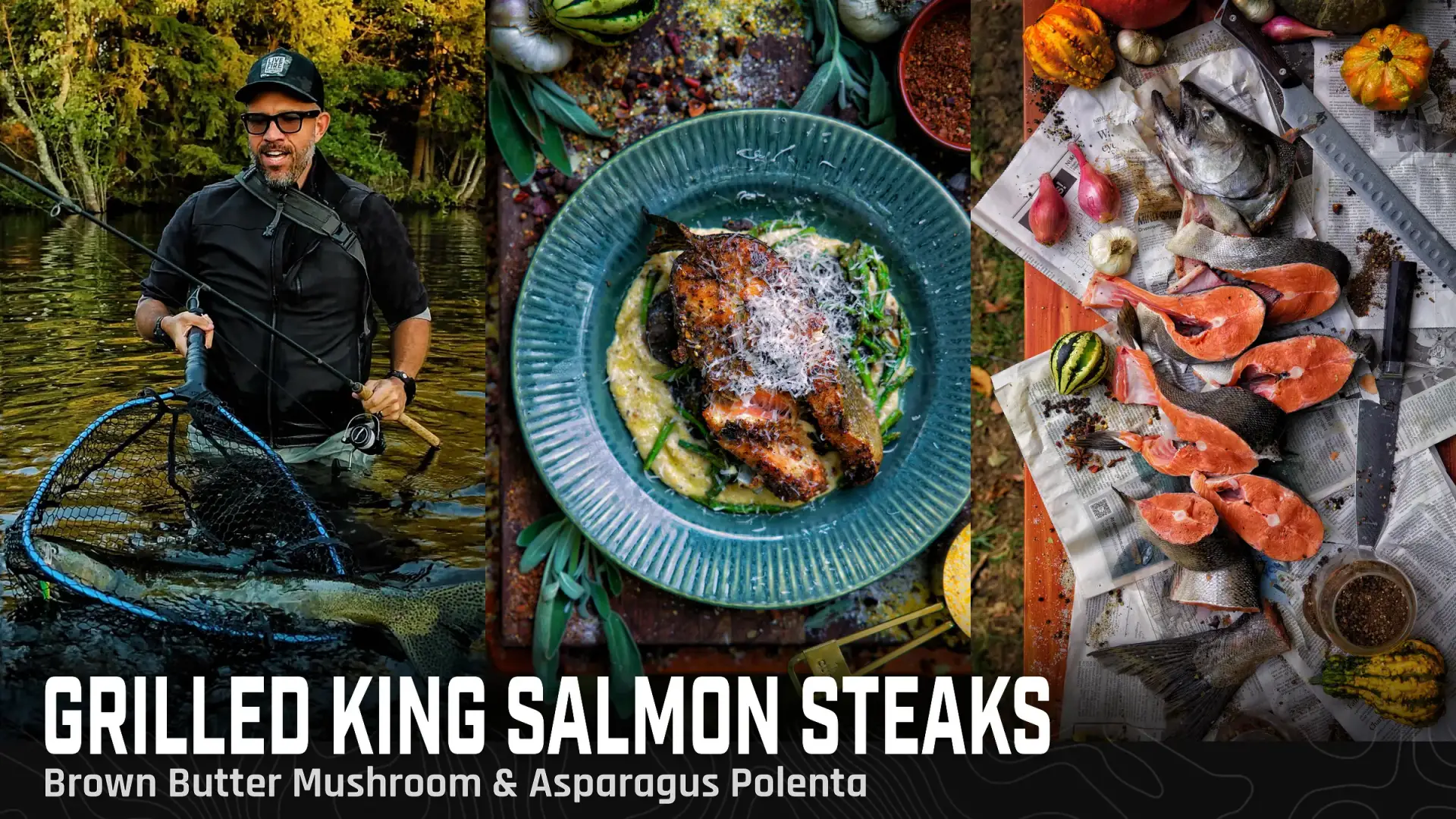
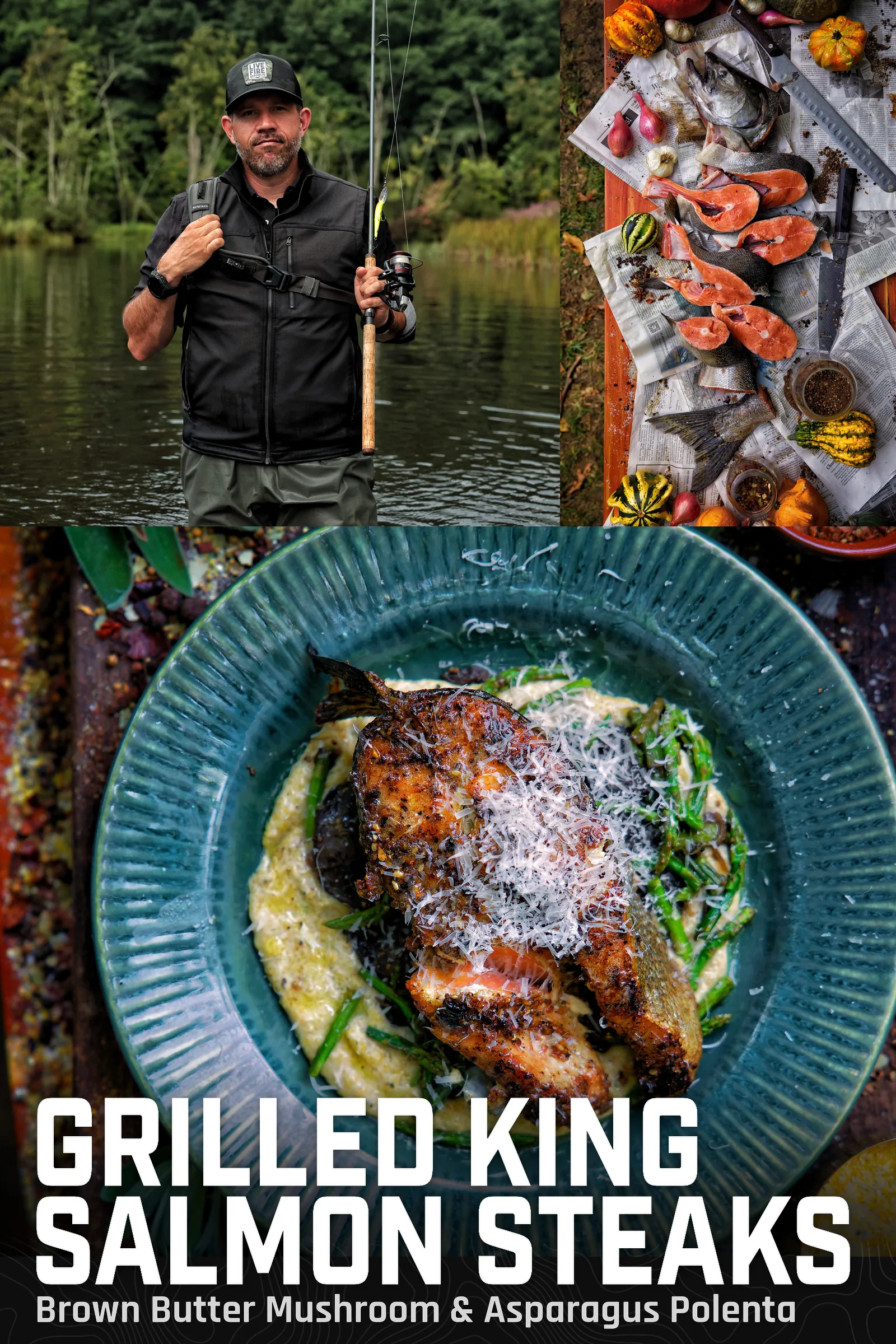
And when you’ve got a fresh King salmon to bring back to camp, dinner tends to work itself out.
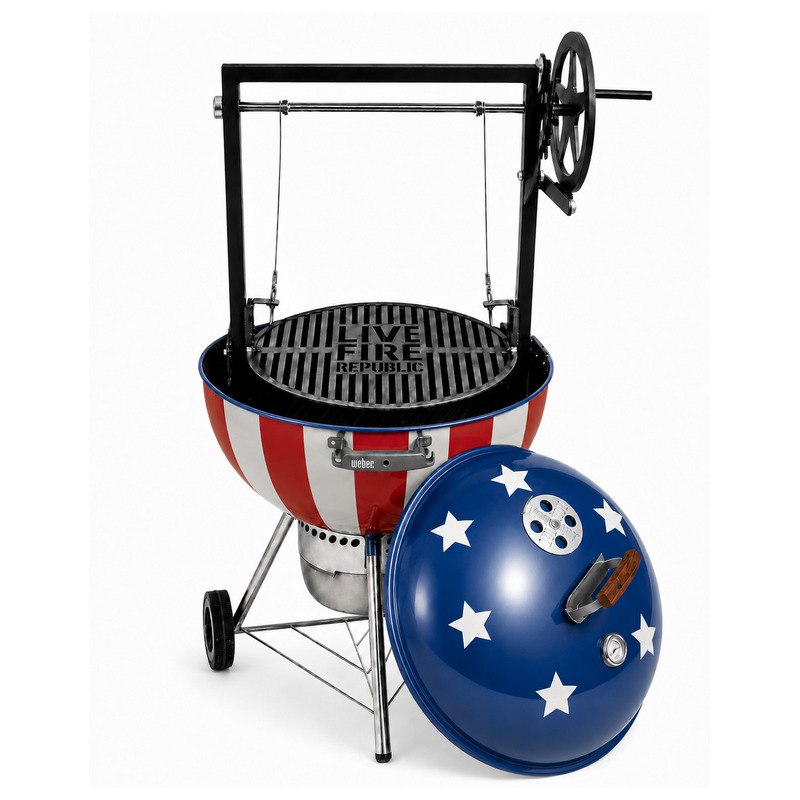
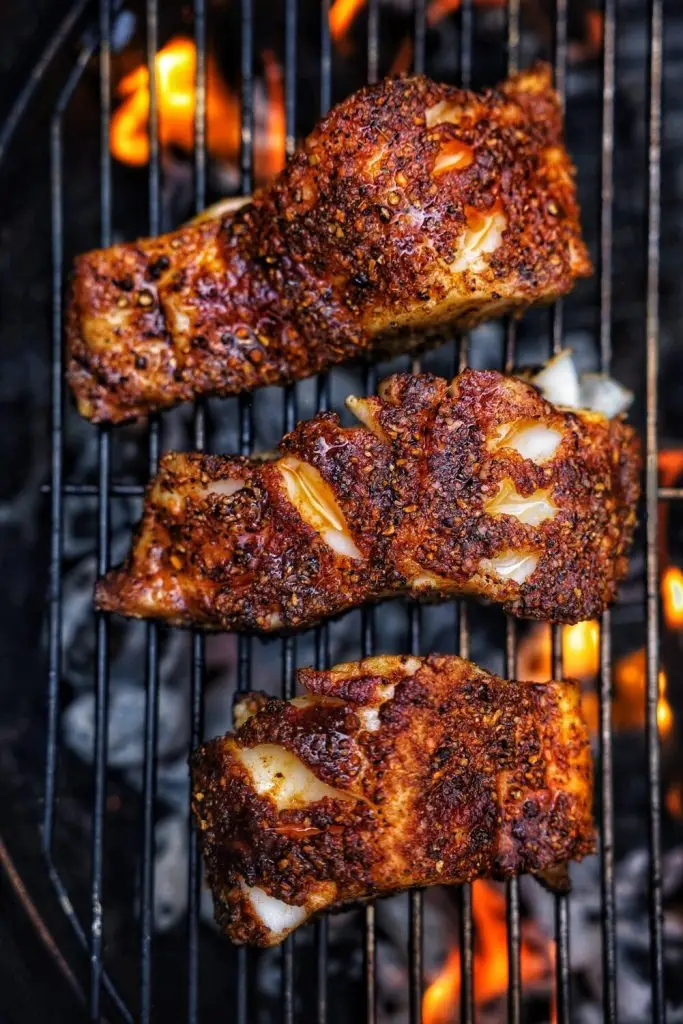
For this Northern Michigan fish camp recipe, we’re taking thick, bone-in King salmon steaks, seasoning them with warm aromatics and fresh herbs, and grilling them over a steady bed of Kingsford charcoal on our carbon steel Santa Maria grill. Alongside, we’re serving rich, creamy polenta with wild mushrooms, asparagus, shallots and garlic sautéed in browned butter.
It’s a straightforward meal built around the catch. The salmon gets a little olive oil, cracked black pepper, kosher salt and a restrained combination of star anise, allspice and cardamom. The vegetables are cooked in cast iron, the polenta simmers while the charcoal comes up to temperature, and the whole plate is finished with garlic-herb butter and fresh lemon.
Nothing particularly complicated, although there’s plenty of opportunity to get the details right.
From the river to the fire, it’s one heck of a way to finish a day of fishing.
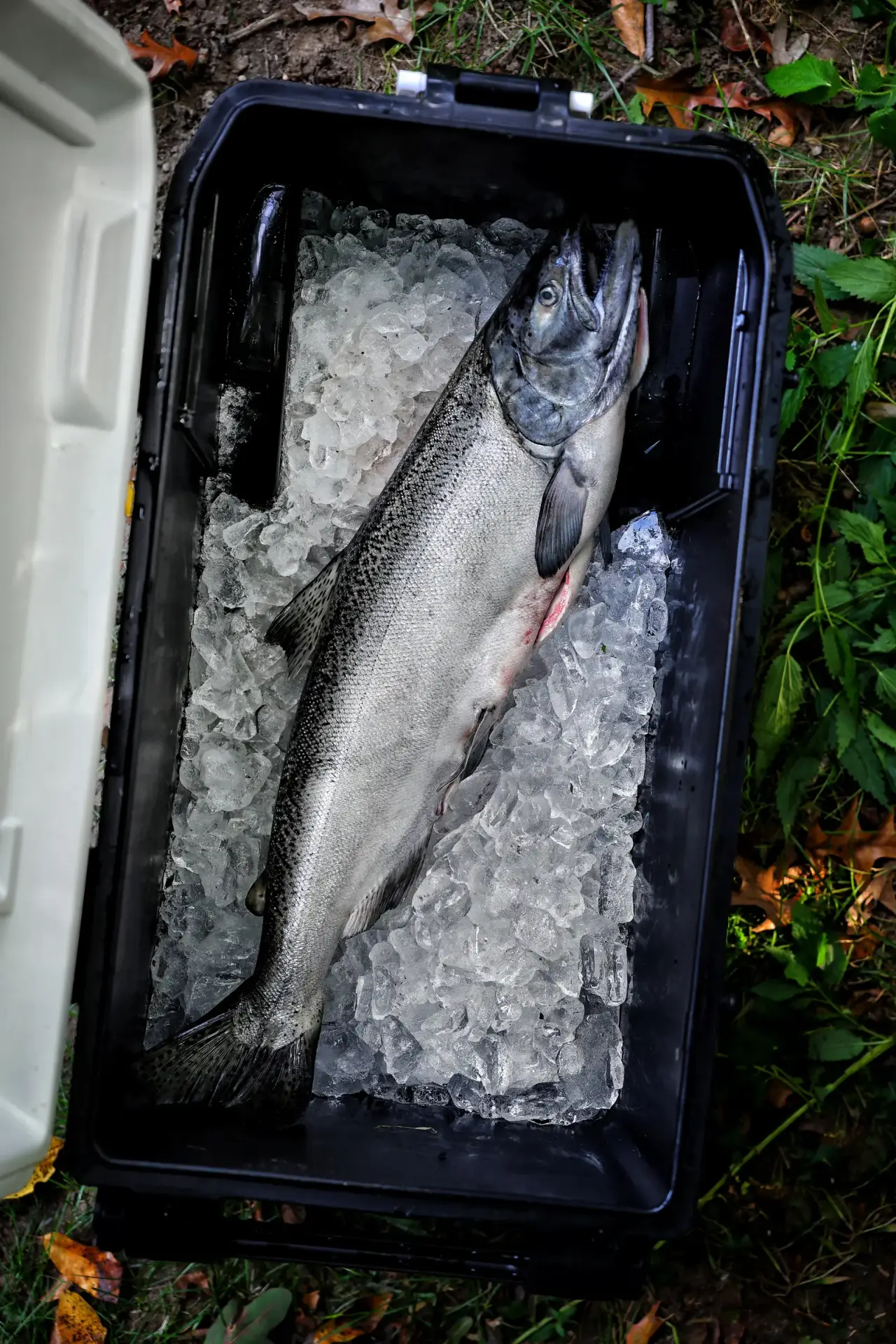
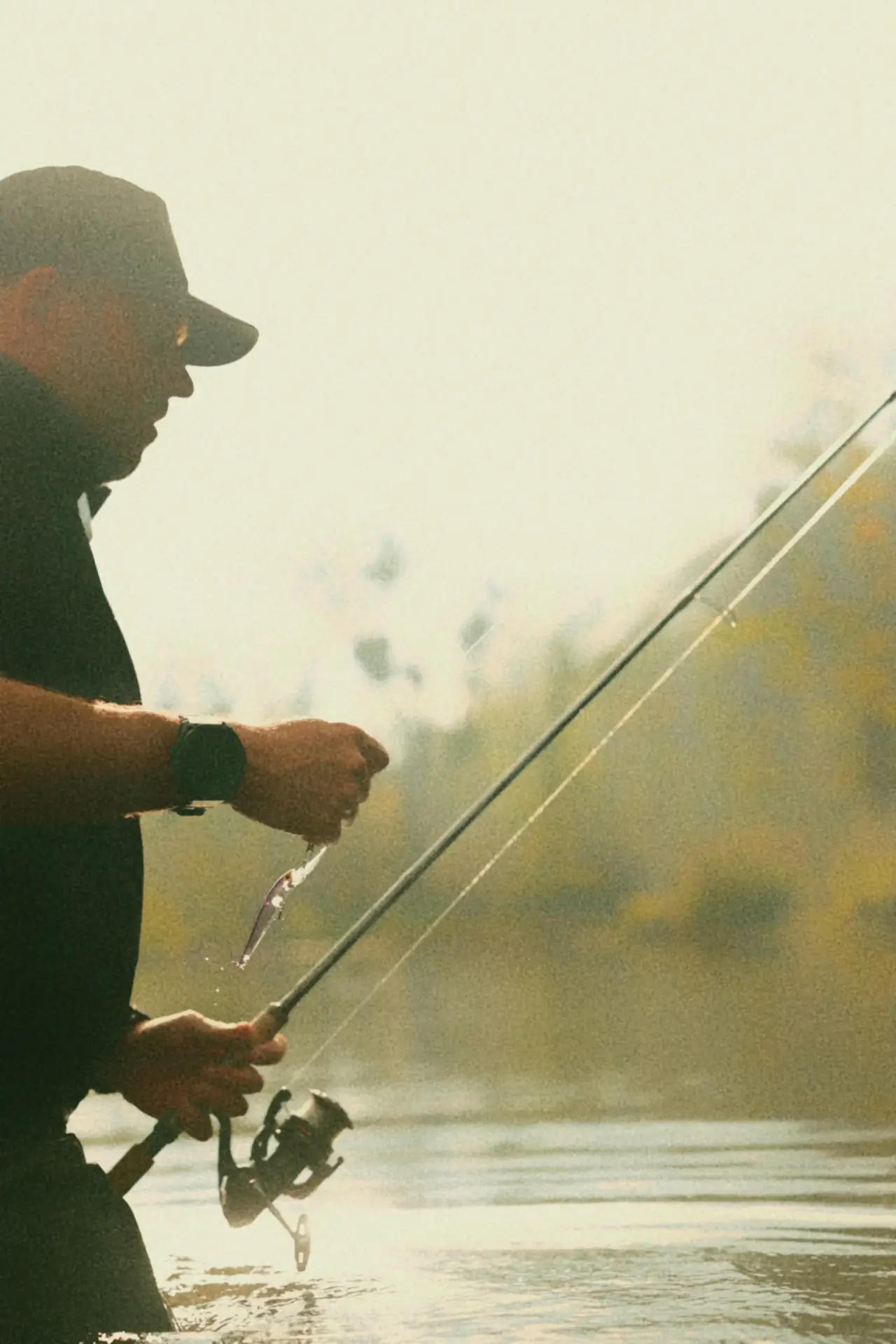
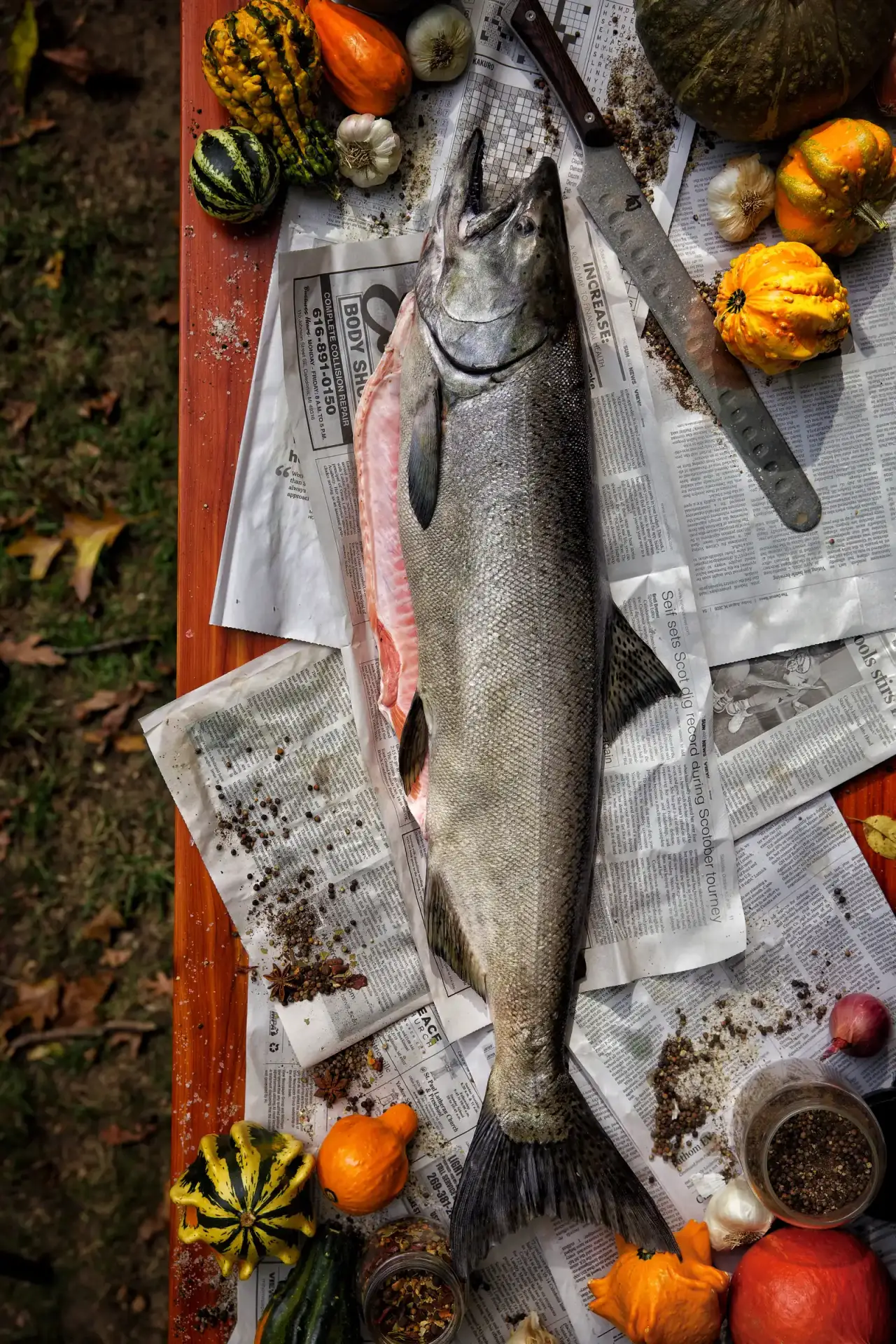
Before the fire ever gets lit, this is the part I like most: a morning on the water, and a King salmon coming back to camp.
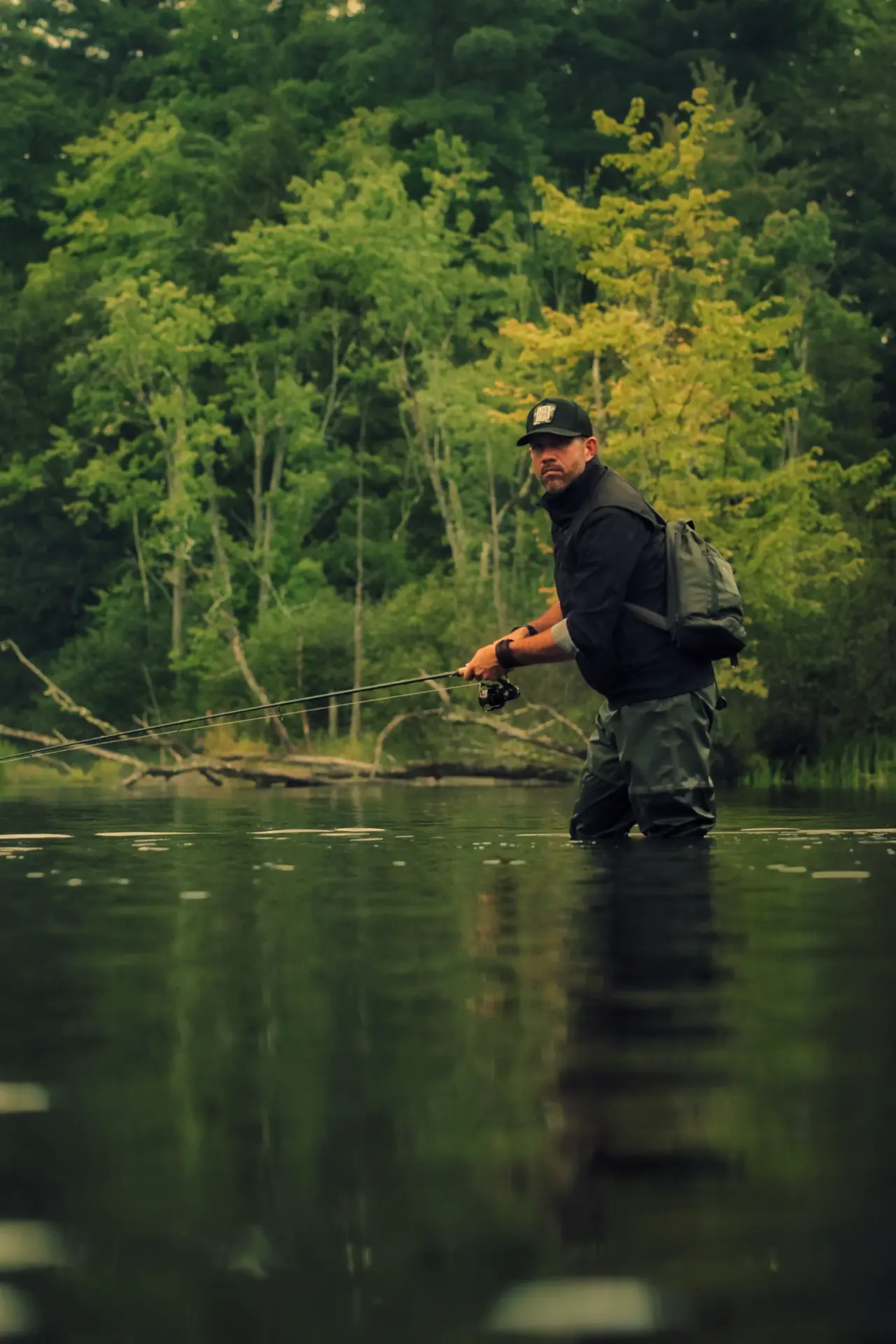
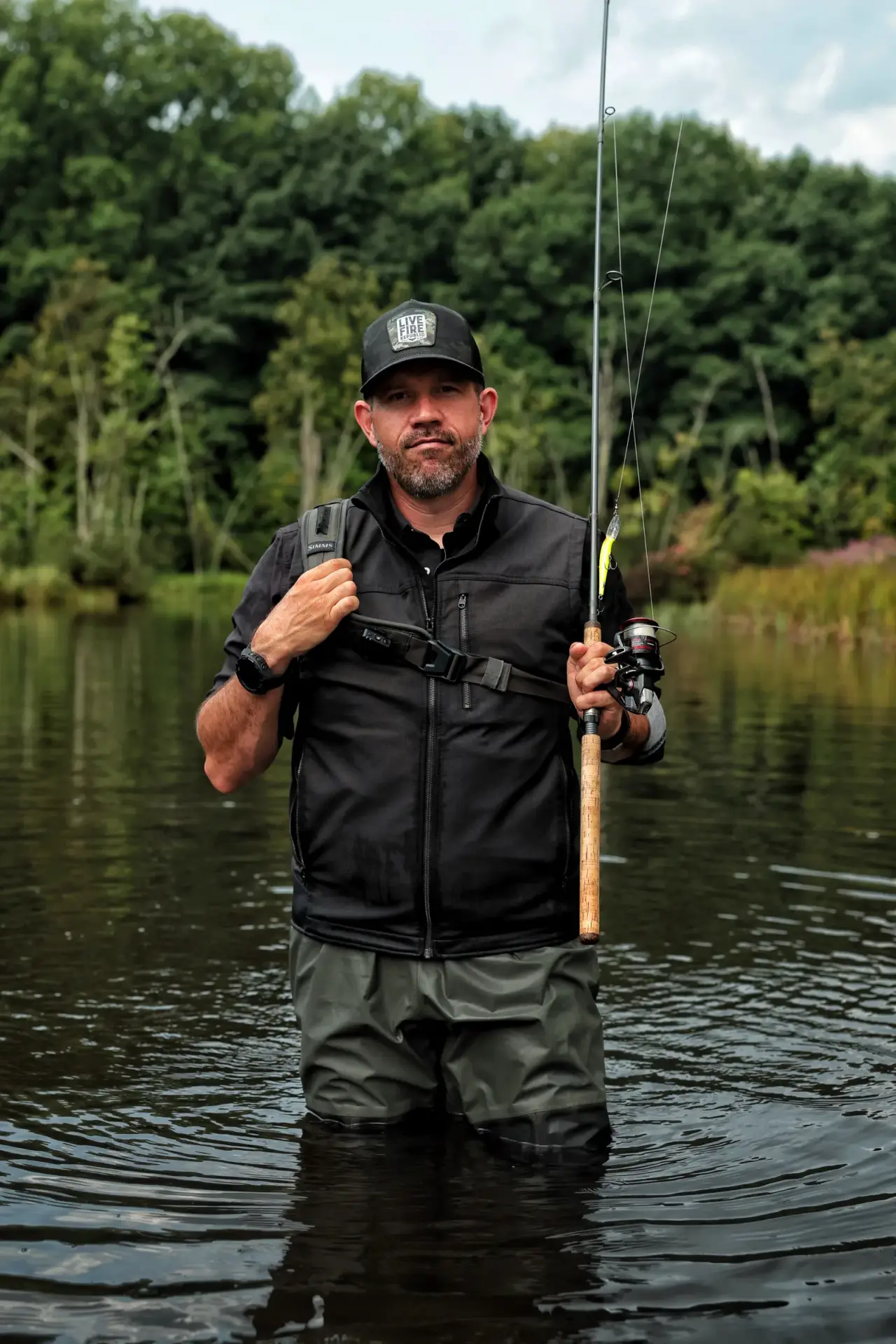
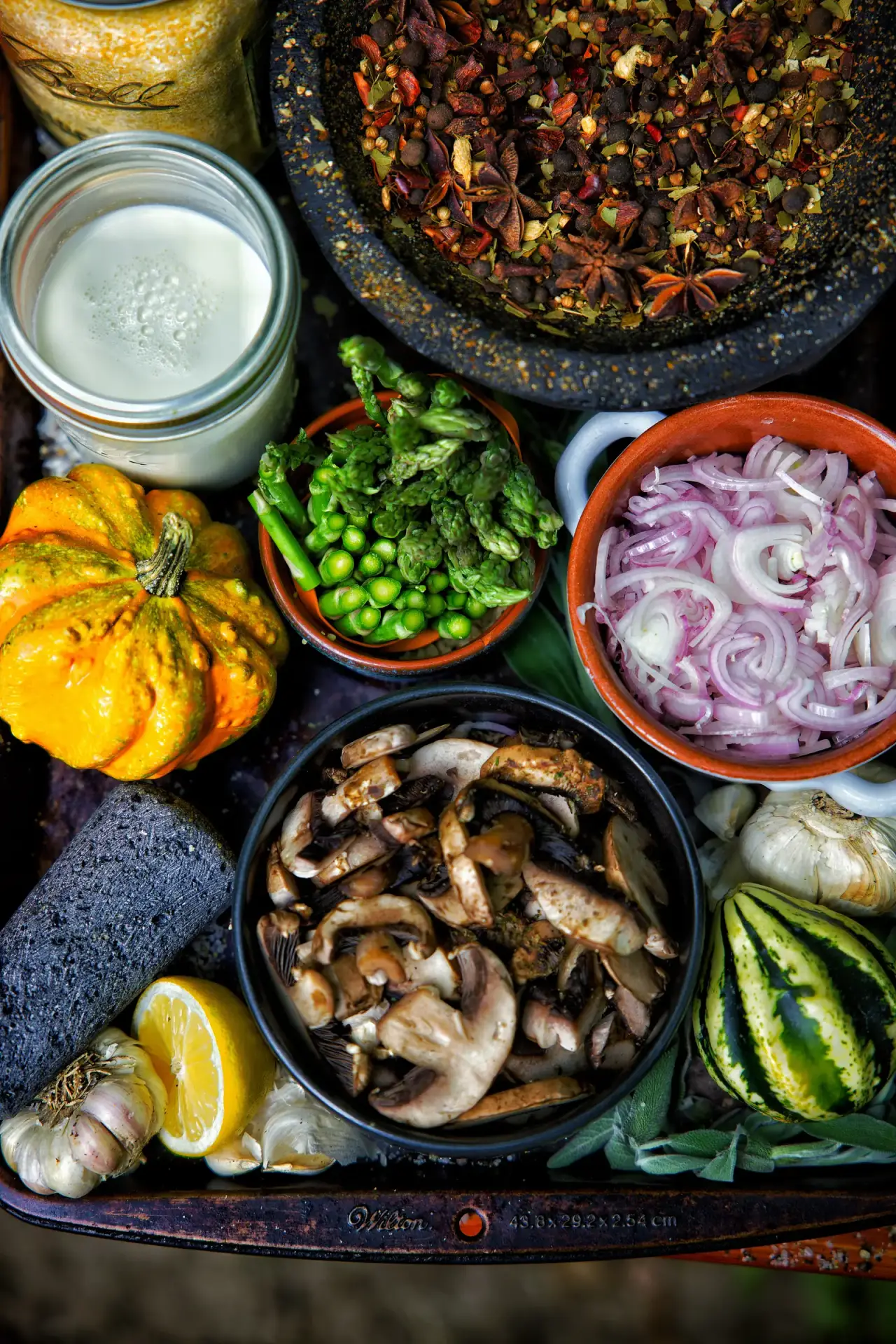
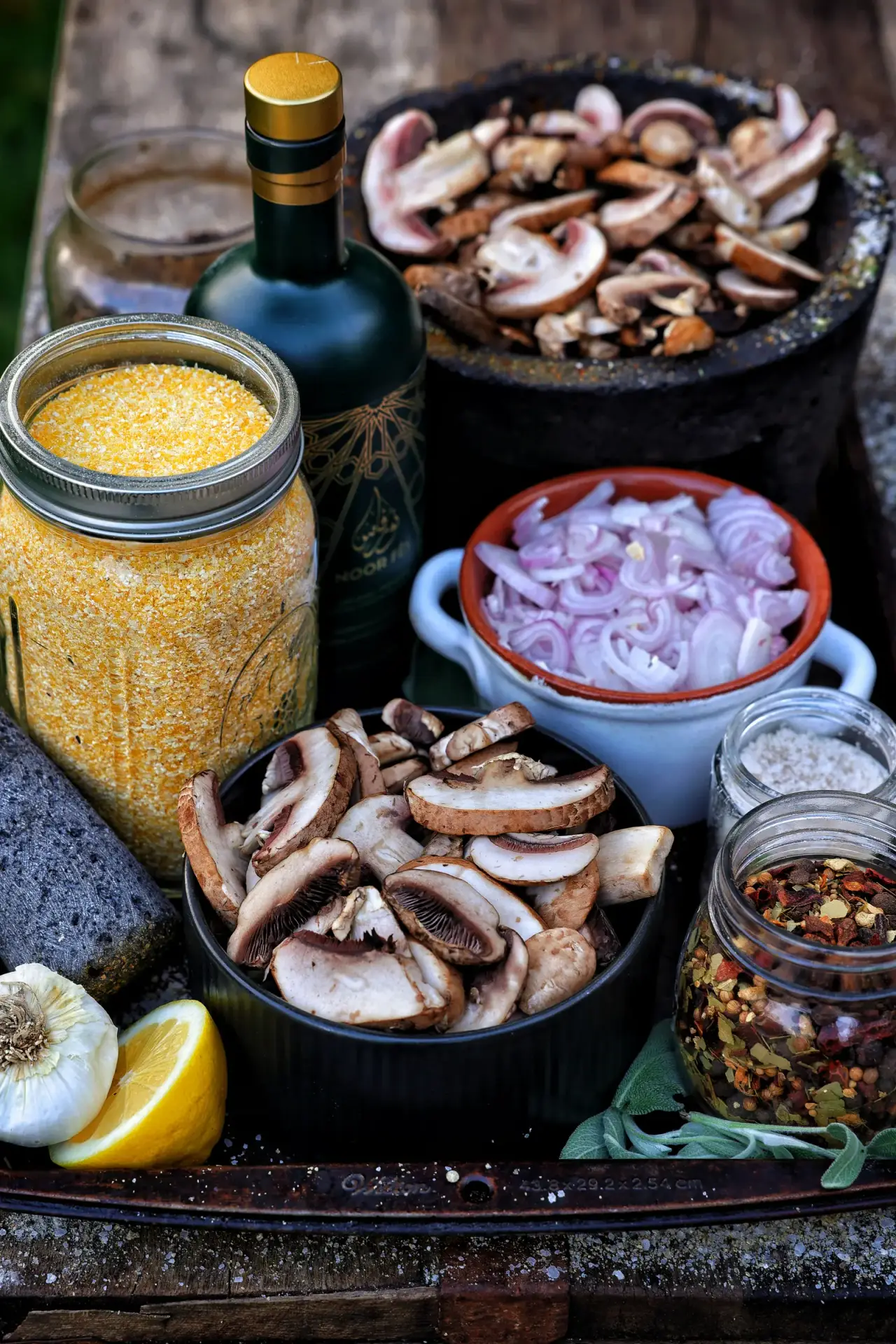
7 Key Ingredients for Grilled King Salmon Steaks with Brown Butter Polenta
1. Fresh King Salmon Steaks — Also known as Chinook salmon, King salmon has rich flavor, substantial texture and enough natural fat to stand up beautifully to charcoal grilling. Thick, bone-in steaks are ideal for this preparation because they hold their shape and cook evenly when handled properly.
2. Kingsford Original Charcoal Briquets — A dependable charcoal fire provides the steady radiant heat needed to develop a lightly caramelized crust without overpowering the salmon. Consistent heat is particularly important when grilling fish on an adjustable Santa Maria grate.
3. Star Anise, Allspice & Cardamom — These warm aromatic spices bring subtle woodsy, citrus and peppery character to the salmon. A little goes a long way, so we’re seasoning with restraint and letting the fresh fish remain the main attraction.
4. Coarse-Ground Polenta — Slowly simmered in chicken stock and heavy cream, coarse-ground polenta creates a creamy, substantial base for the salmon. Its mild corn flavor pairs naturally with browned butter and sautéed mushrooms.
5. Wild Mushrooms & Fresh Asparagus — Earthy mushrooms and fresh asparagus bring texture and seasonal flavor to the polenta. Use a combination of cultivated mushrooms such as cremini, oyster or shiitake, along with fresh asparagus cut into bite-sized pieces.
6. Shallots, Garlic & Browned Butter — Shallots add mild sweetness, garlic builds savory character and browned butter delivers toasted, nutty richness. Together, they transform a simple pot of polenta into something worth making on its own.
7. Fresh Rosemary, Thyme & Lemon — Fresh herbs and lemon finish the grilled salmon, adding fragrance and acidity that balance the richness of the fish and buttery polenta.
Once the fish is on the board, the rest of the meal is just mushrooms, asparagus, polenta and a restrained handful of warm spices.
Northern Michigan King Salmon: From the River to the Cutting Board
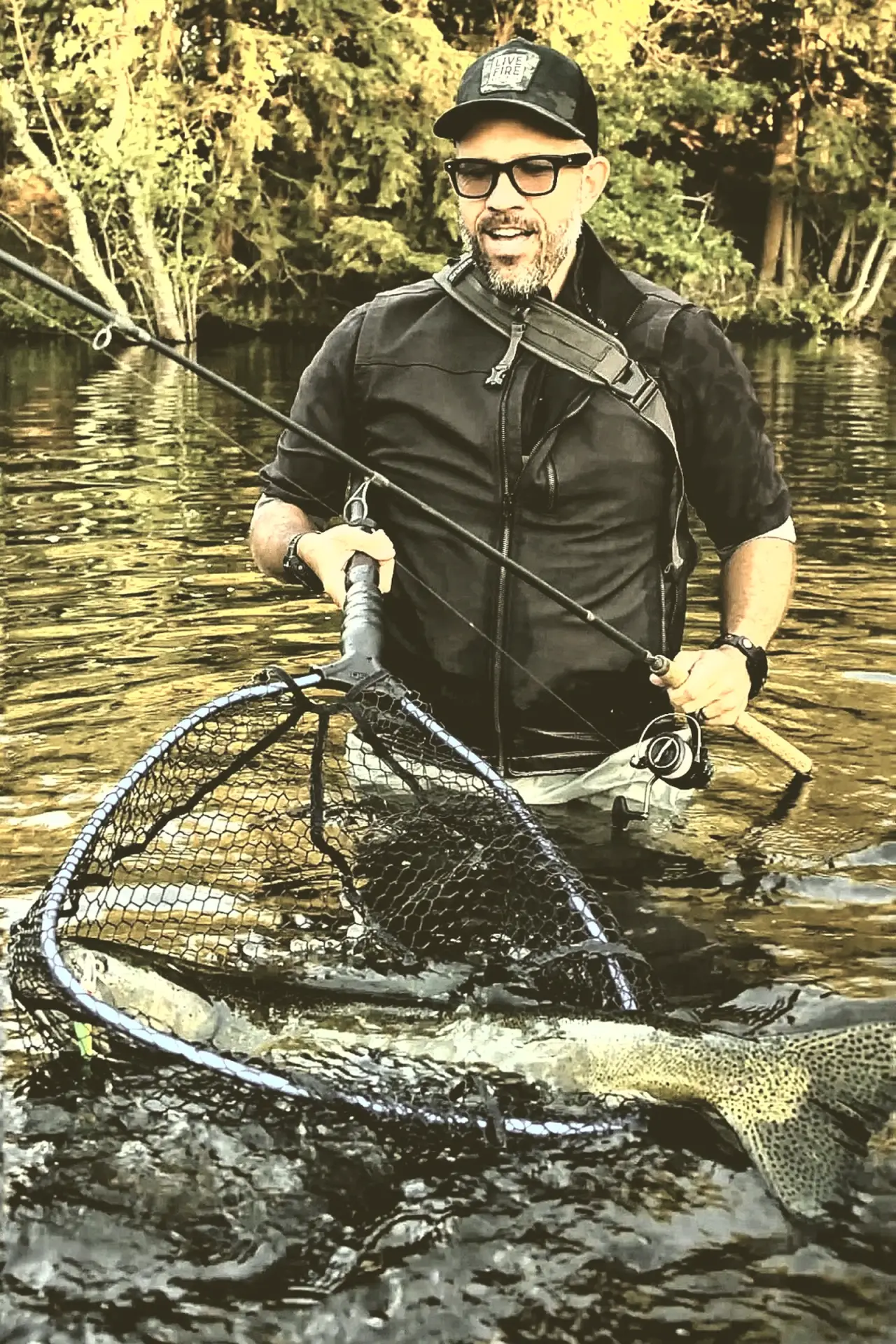
Northern Michigan offers some outstanding salmon fishing, particularly during the late-summer and fall runs when mature Chinook salmon move into tributaries connected to the Great Lakes. It’s a challenging fishery, and a good-sized King salmon is an impressive fish to land. Strong current, changing conditions and powerful fish all make for a memorable day on the water.
Once the fishing is finished, proper handling becomes the priority. If you’re keeping a legally harvested salmon, cool it promptly and keep it properly iced until you’re ready to prepare it. Good fish handling is every bit as important as good cooking, particularly with a larger salmon that may be divided into multiple meals.
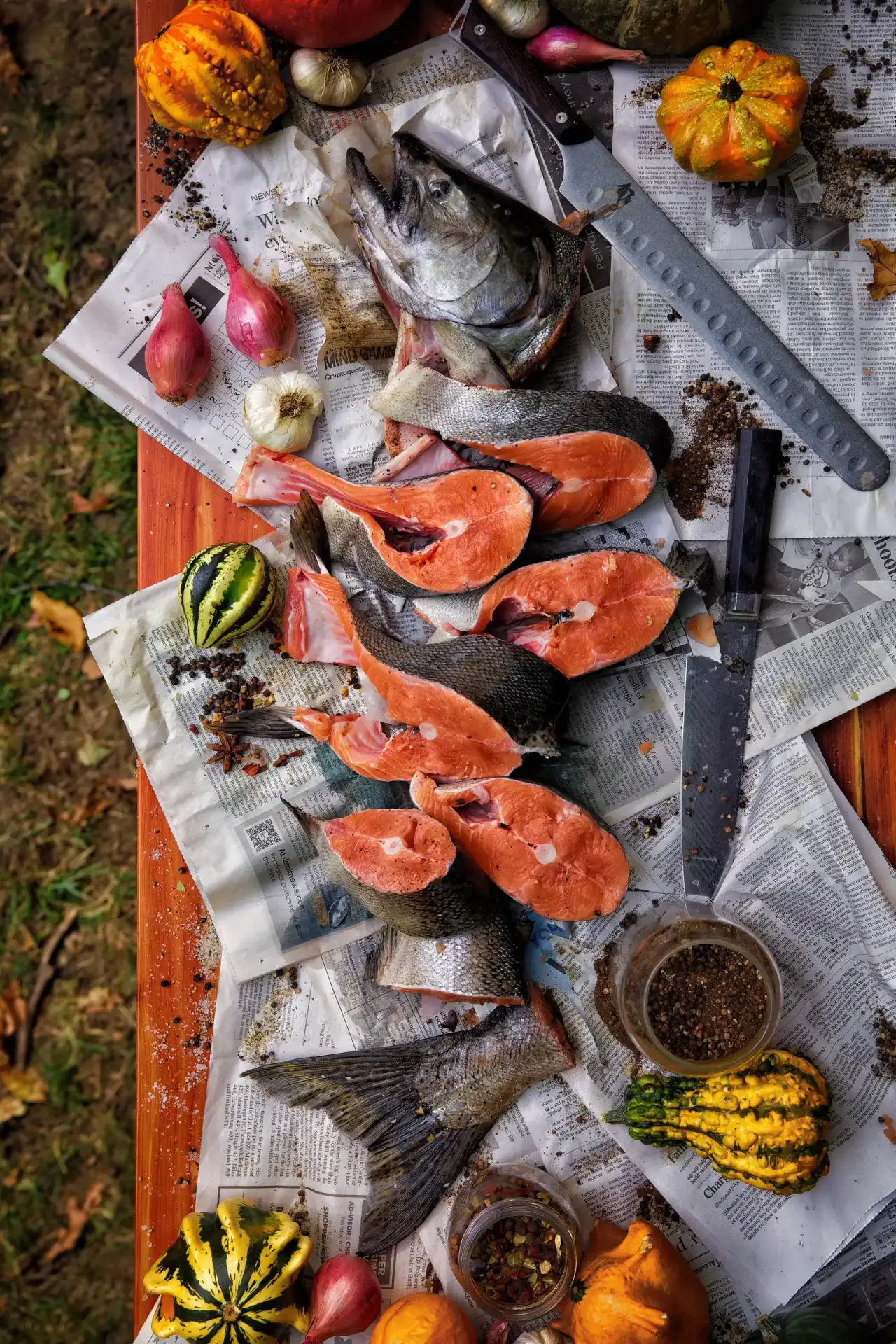
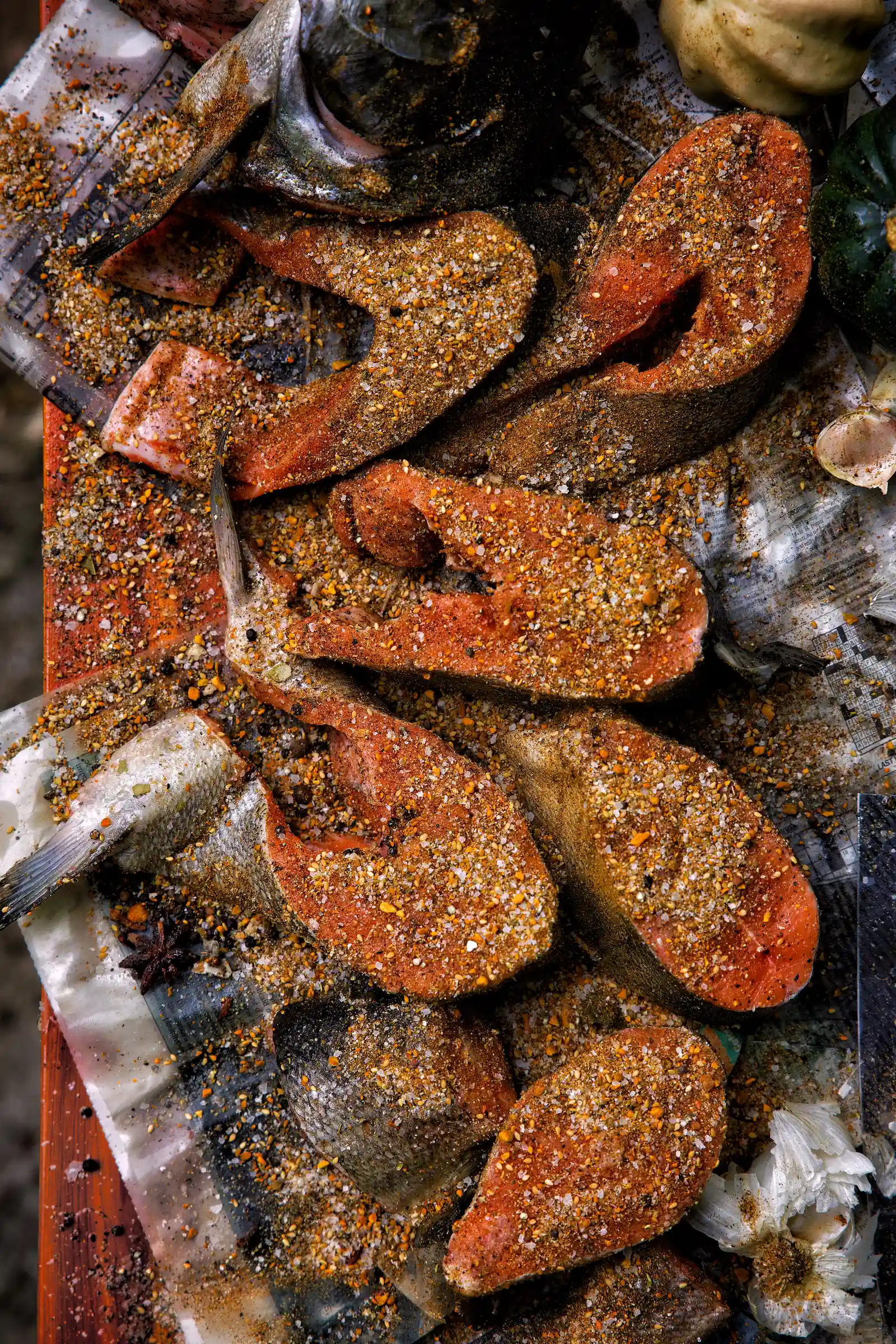
For this recipe, we’re cutting the salmon crosswise into thick, bone-in steaks, approximately 1½–2 inches across. Unlike a traditional fillet, a salmon steak retains the center bone and surrounding skin, which provide structure and help the fish hold together on the grill. The exposed flesh gives us plenty of surface area for seasoning and developing color over charcoal.
Take your time with the knife, inspect the steaks for loose bones and clean away any remaining scales. Once portioned, pat the fish dry and keep it chilled until the grill is ready. The skin helps protect the flesh during cooking, and the bones provide structure that makes thick steaks easier to handle. Remove any loose scales or bone fragments before cooking.
Fresh fish doesn’t need much help. The objective is to prepare it properly and avoid getting in its way.
If you didn’t catch the fish yourself, this recipe works just as well with fresh or properly thawed King salmon from a reputable fishmonger. Atlantic salmon and coho can also work, although texture, fat content and cooking times may differ.
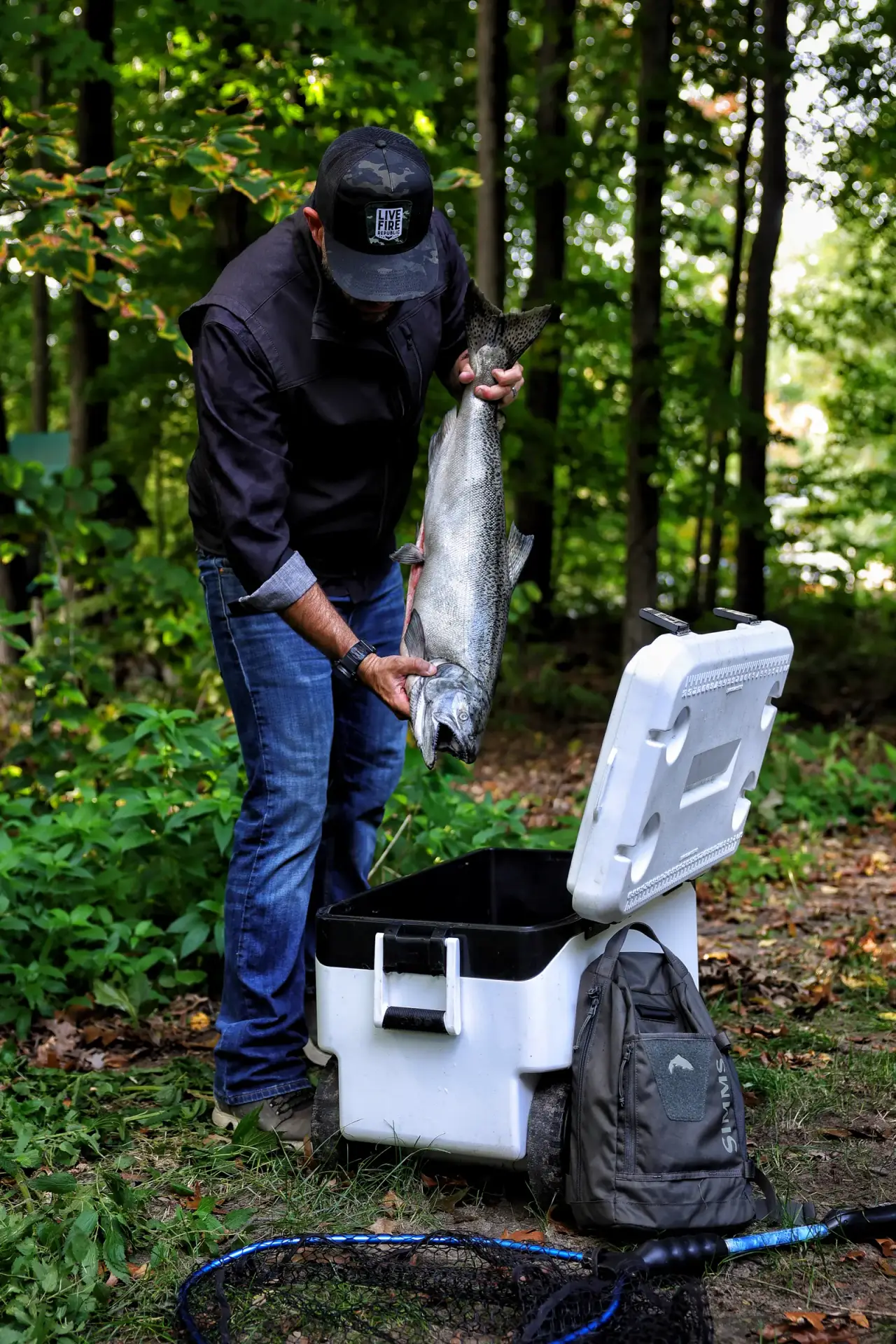
Here’s the catch, cut into thick bone-in steaks and seasoned for the fire.
Is King salmon the same as Chinook salmon?
Yes. King salmon and Chinook salmon are common names for the same species, Oncorhynchus tshawytscha. It’s the largest species of Pacific salmon and is also found in the Great Lakes.
Why King Salmon Is So Good Over Charcoal
King salmon is particularly well suited to live-fire cooking because of its rich flesh and relatively high natural fat content. Compared with leaner fish, it offers a little more forgiveness over the grill while developing excellent flavor from charcoal and a lightly caramelized exterior.
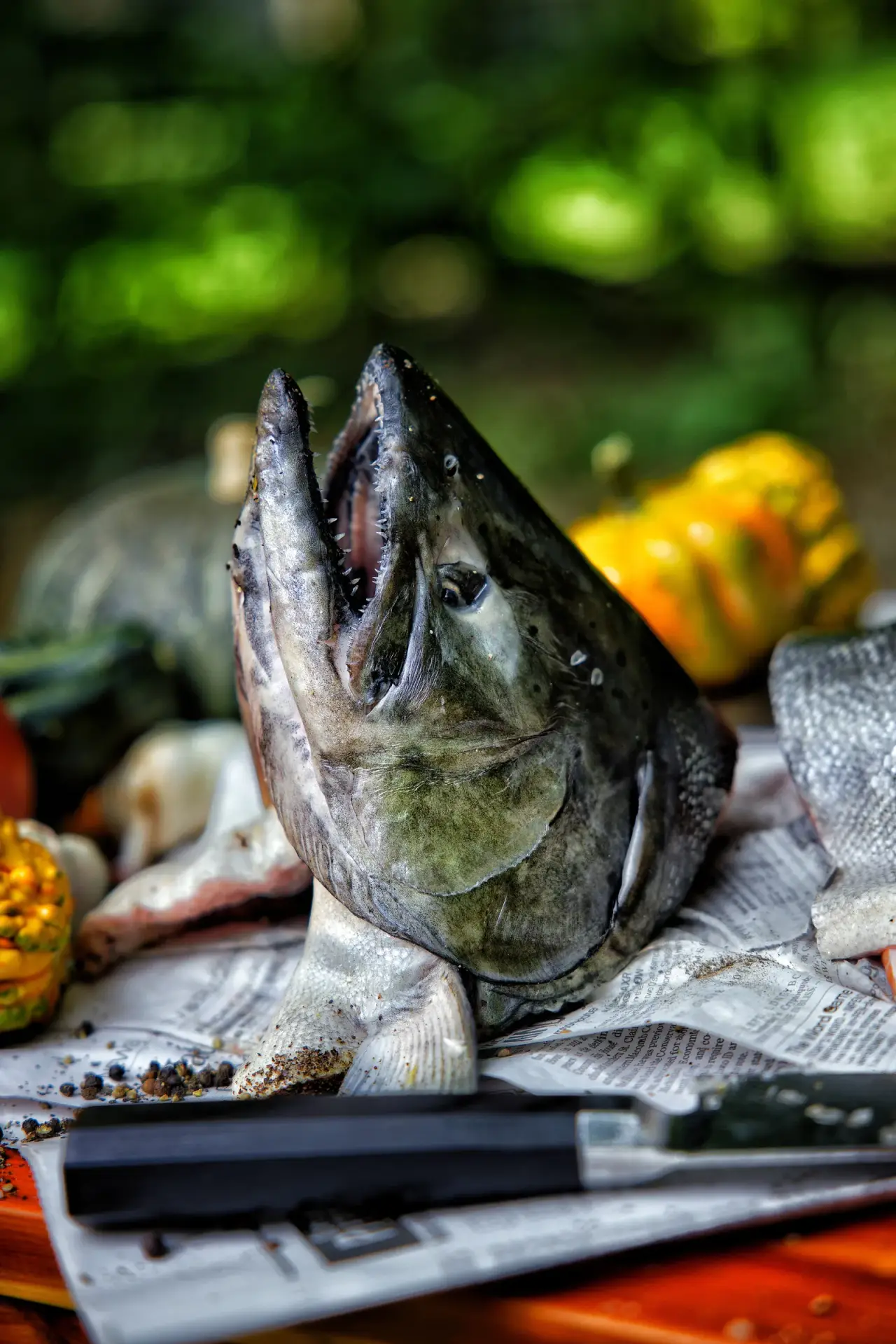
That doesn’t mean you should treat salmon like a steak.
Fish responds quickly to heat, and the difference between properly cooked and overdone can be surprisingly small. Thick steaks are helpful because they provide more time to develop surface color while the center cooks. Leaving the skin intact also protects portions of the flesh from direct heat and makes the steaks easier to handle.
For charcoal-grilled King salmon, I prefer a steady, medium-high fire rather than an aggressively flaming grill. We’re looking for a good sizzle when the fish meets the grate, followed by controlled cooking and minimal unnecessary handling.
Let the salmon develop a crust before turning it, and use a thermometer instead of guessing at doneness. It’s a simple approach that produces consistently better results.
Cooking Salmon on a Santa Maria Grill
One of the best things about our Santa Maria-style grill is the ability to adjust the cooking surface in relation to the fire. Rather than moving the fish constantly between different heat zones, you can raise or lower the grate to control how much radiant heat reaches the salmon.
Begin with a full chimney of Kingsford Original Charcoal Briquets and establish an even bed of glowing embers beneath the carbon steel grate. Allow the fire to settle before cooking. You want consistent heat and clean-burning charcoal, not tall flames rolling through the cooking surface.
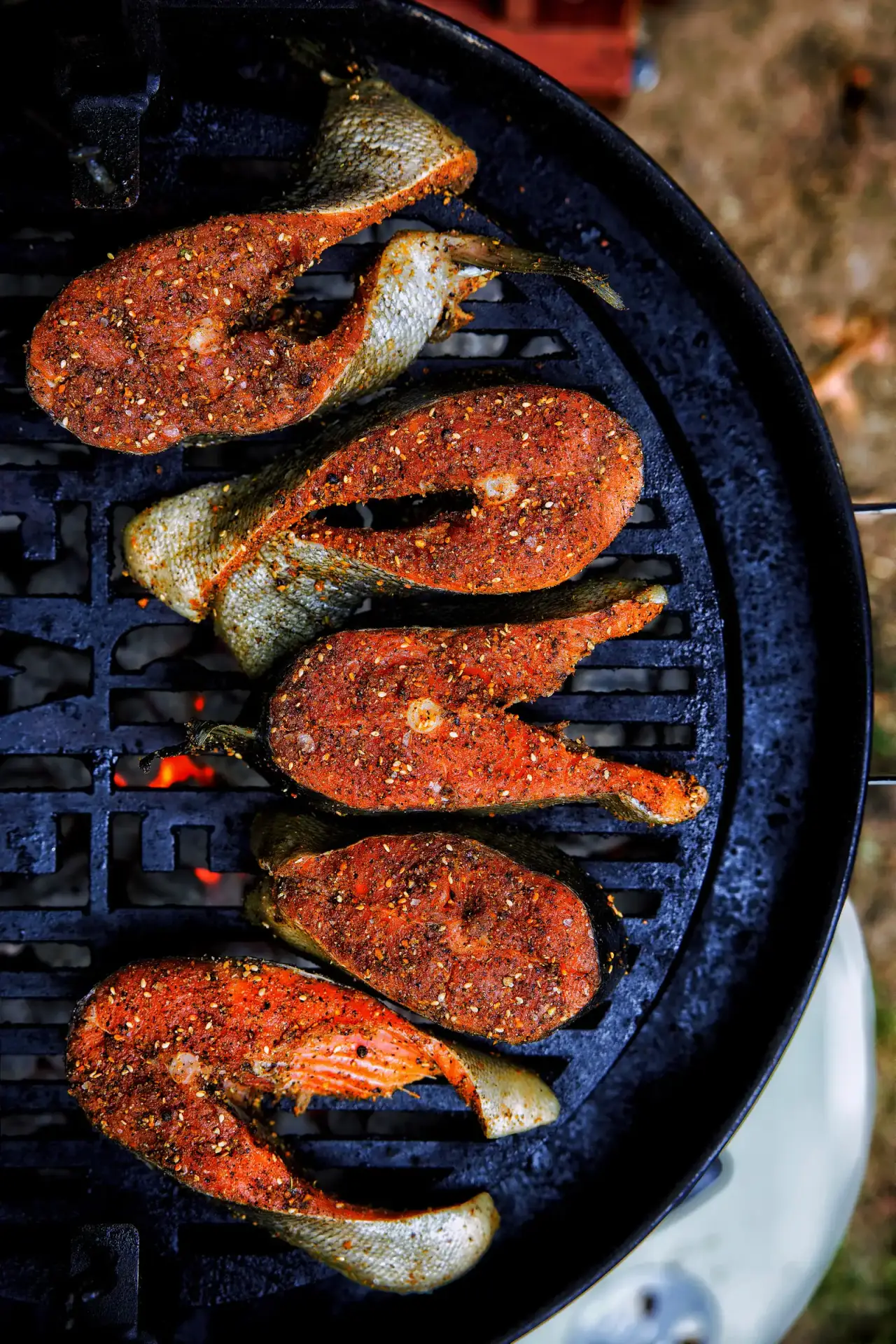
For grilled king salmon steaks, aim for approximately 400–450°F (204–232°C) at the cooking grate. Clean the grate thoroughly and give it a light coating of high-heat oil. Place the seasoned salmon steaks over the charcoal and allow them to cook undisturbed until the exterior develops color and naturally releases.
Depending on thickness, expect roughly 3–5 minutes per side initially, with additional time as needed. Raise the grate if the surface begins browning faster than the interior cooks. Use a broad fish spatula to turn the steaks carefully, supporting the flesh rather than pulling on the skin.
Then the steaks go over a steady bed of charcoal, just long enough to take on color without drying out.
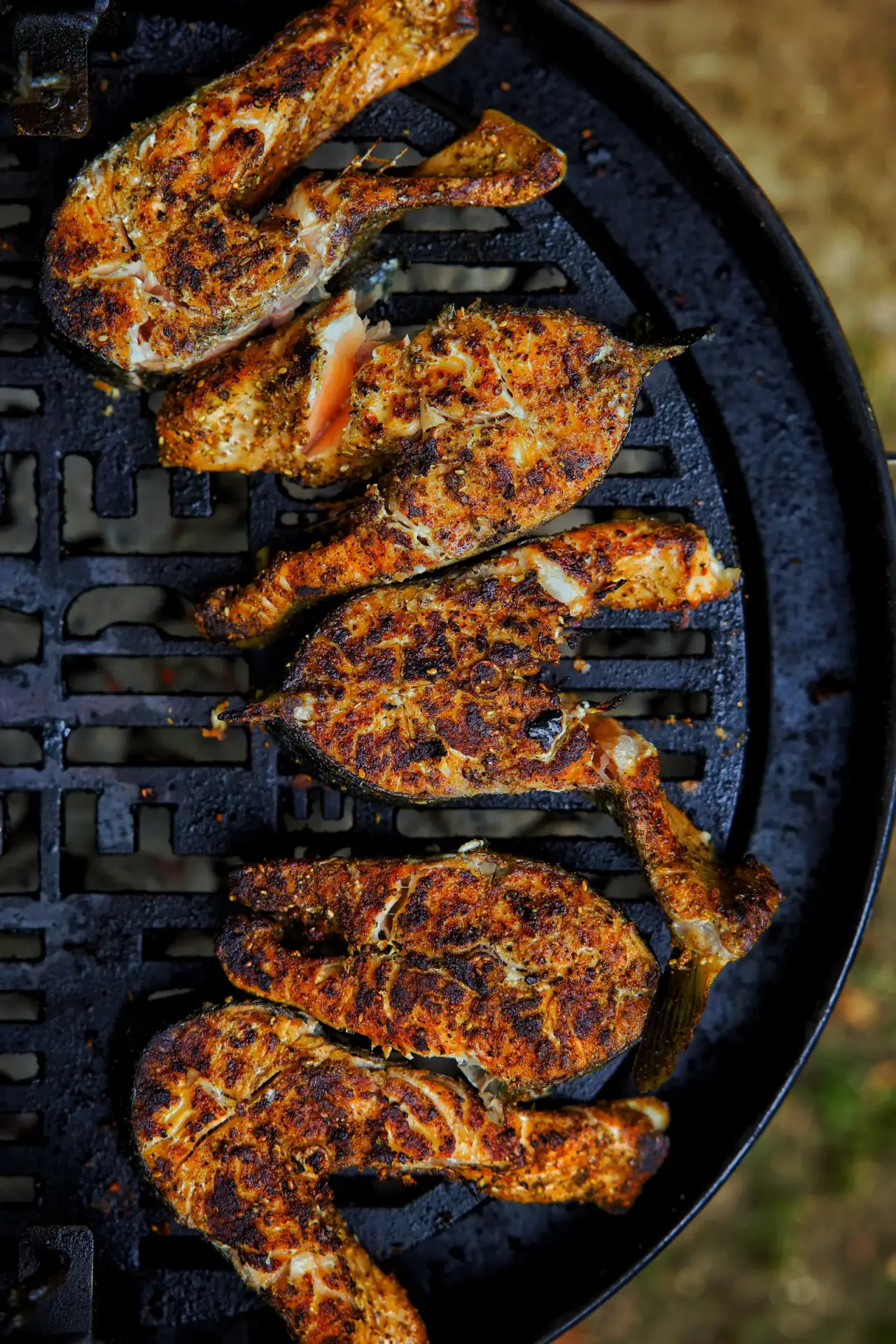
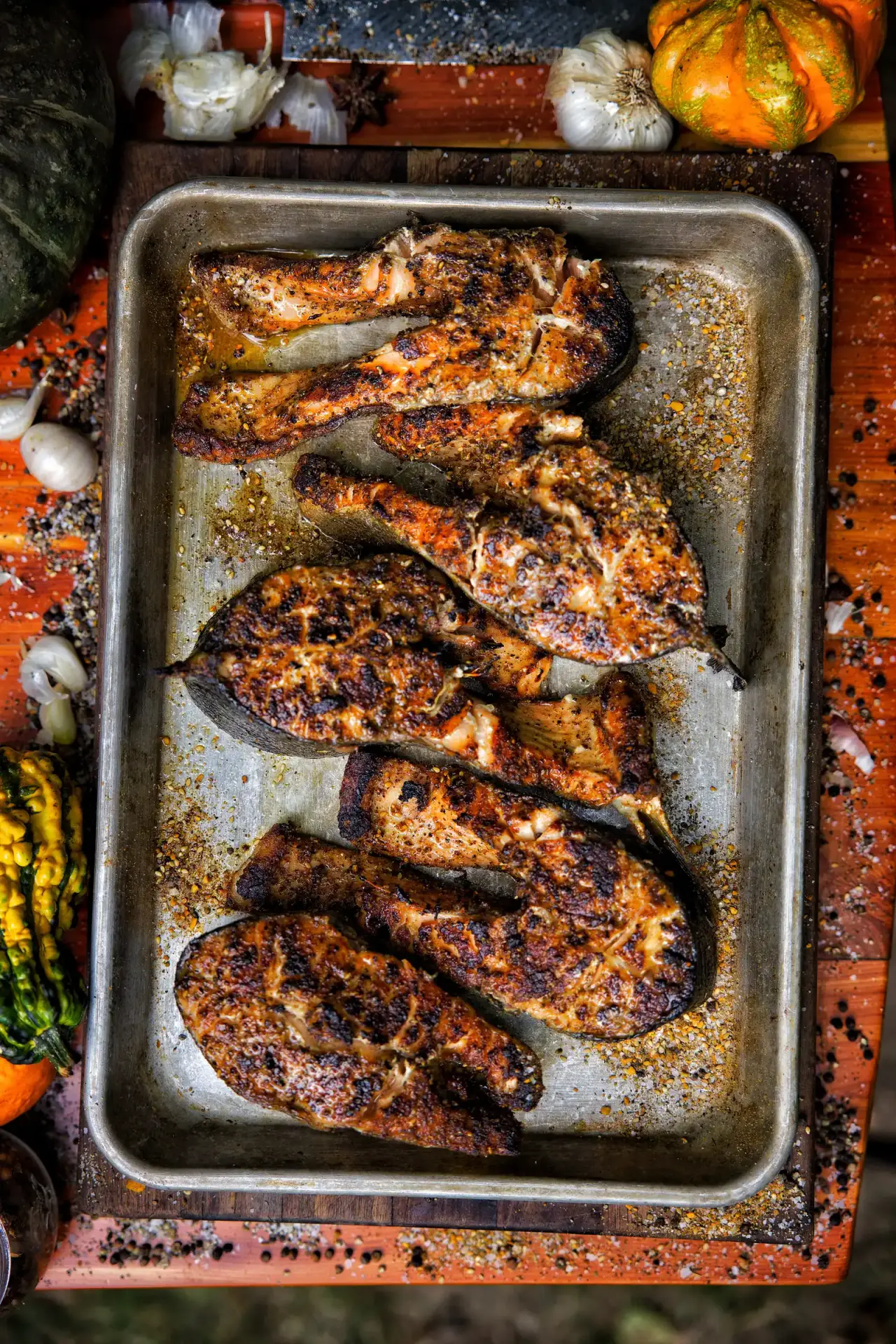
The USDA recommends cooking salmon to an internal temperature of 145°F (63°C), measured in the thickest portion without touching the bone. Because steak thickness and charcoal intensity vary, temperature is a more reliable guide than the clock.
Once cooked, remove the fish and finish it with warm herb butter and fresh lemon.
How long does it take to grill thick King salmon steaks?
Steaks approximately 1½–2 inches thick generally require around 8–15 minutes, depending on grill temperature and thickness. Begin checking early and cook to the recommended safe internal temperature of 145°F (63°C). Use a clean, lightly oiled cooking grate over a steady bed of charcoal at medium-high heat, and allow the salmon to develop a crust before turning.
A Different Approach to Seasoning Grilled Salmon
Most grilled salmon recipes lean heavily on familiar ingredients such as lemon, garlic, dill and black pepper. They’re dependable for good reason, but for this fish-camp preparation, I wanted something a little more aromatic.
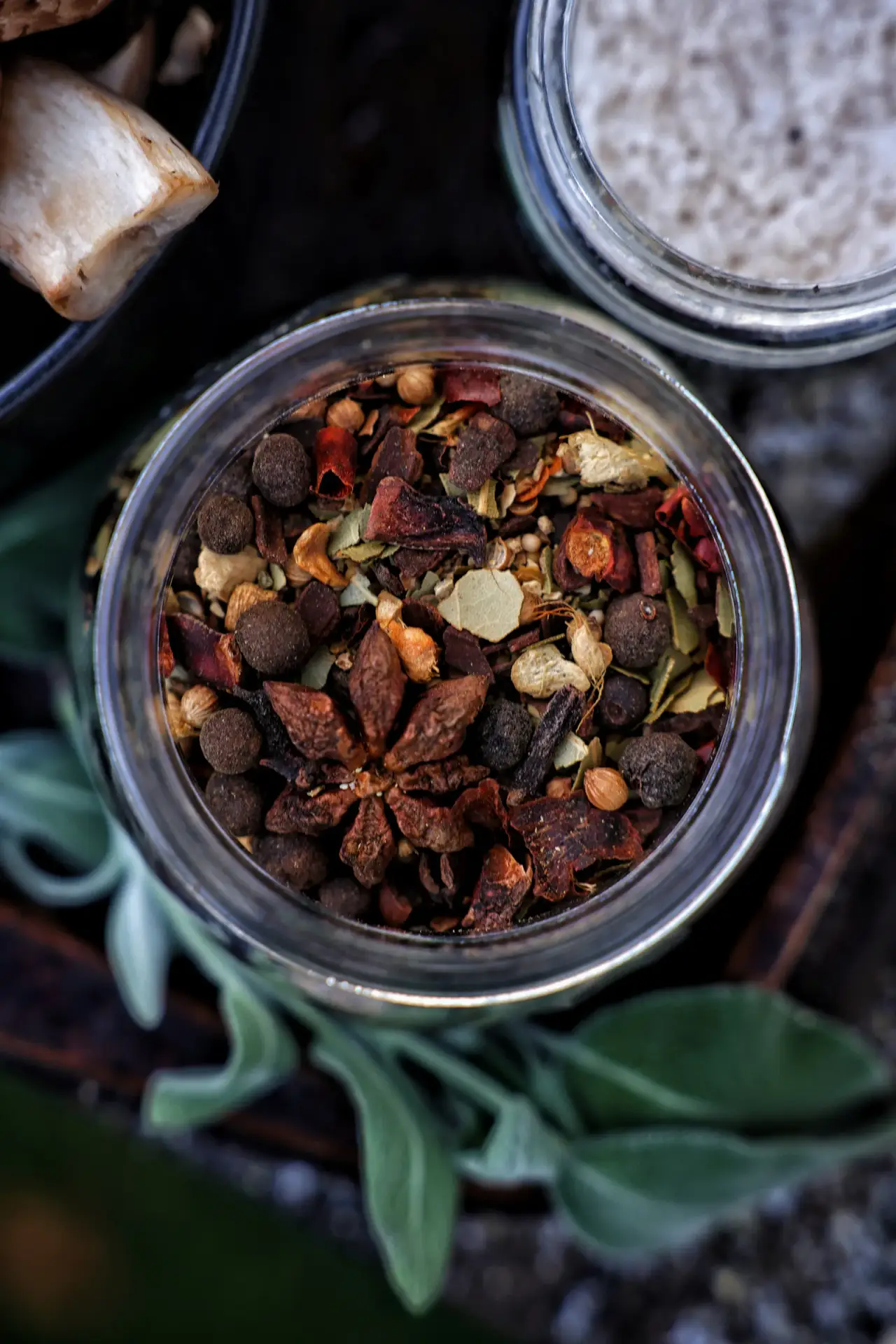
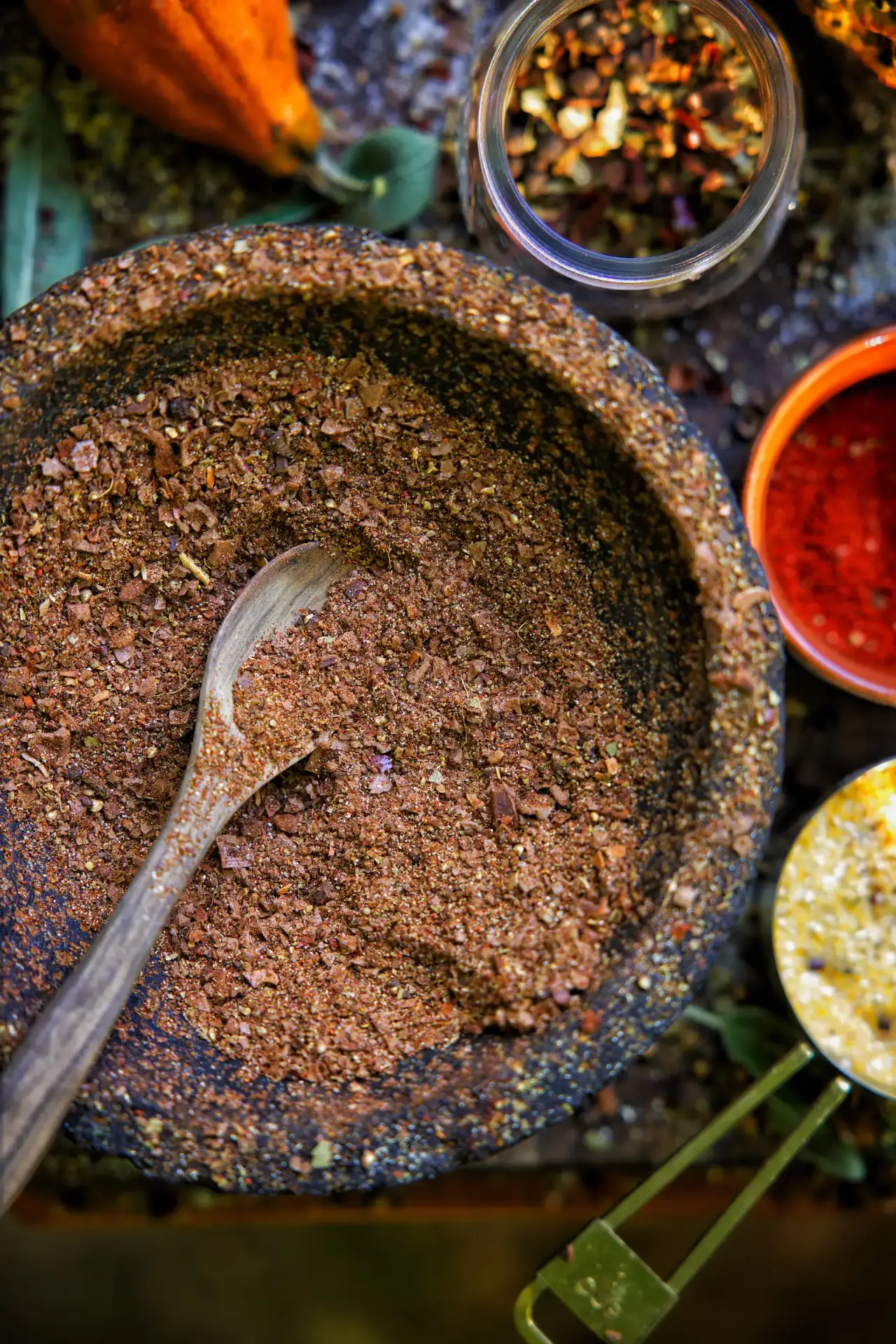
We’re using a blend of ground star anise, allspice and cardamom, seasoned alongside kosher salt and cracked black pepper. Star anise adds a subtle licorice-like fragrance, allspice brings warm, earthy character and cardamom contributes bright, almost citrusy notes.
Together, they complement the naturally rich flavor of King salmon, particularly when exposed to the gentle smoke and high radiant heat of charcoal.
The important detail is proportion. These spices can become overwhelming if applied too heavily, so use a light hand. The seasoning should add interest without turning a beautifully fresh fish into a mouthful of spice. Kosher salt, cracked black pepper, garlic and fresh herbs are an excellent foundation; the ground star anise, allspice and cardamom add aromatic complexity when used sparingly.
I prefer keeping the rosemary and thyme separate until the finishing stage. Warm them gently in melted butter with crushed garlic, then spoon the aromatic butter over the salmon after it comes off the fire. This preserves the herbs’ fragrance and avoids scorching delicate leaves over the coals.
A squeeze of lemon brings the entire preparation together.
The seasoning is just a restrained handful of whole spices, ground fresh at camp.
Brown Butter Mushroom & Asparagus Polenta
The salmon may be the reason we headed to the grill, but the brown butter mushroom and asparagus polenta is a big part of what makes this meal work.
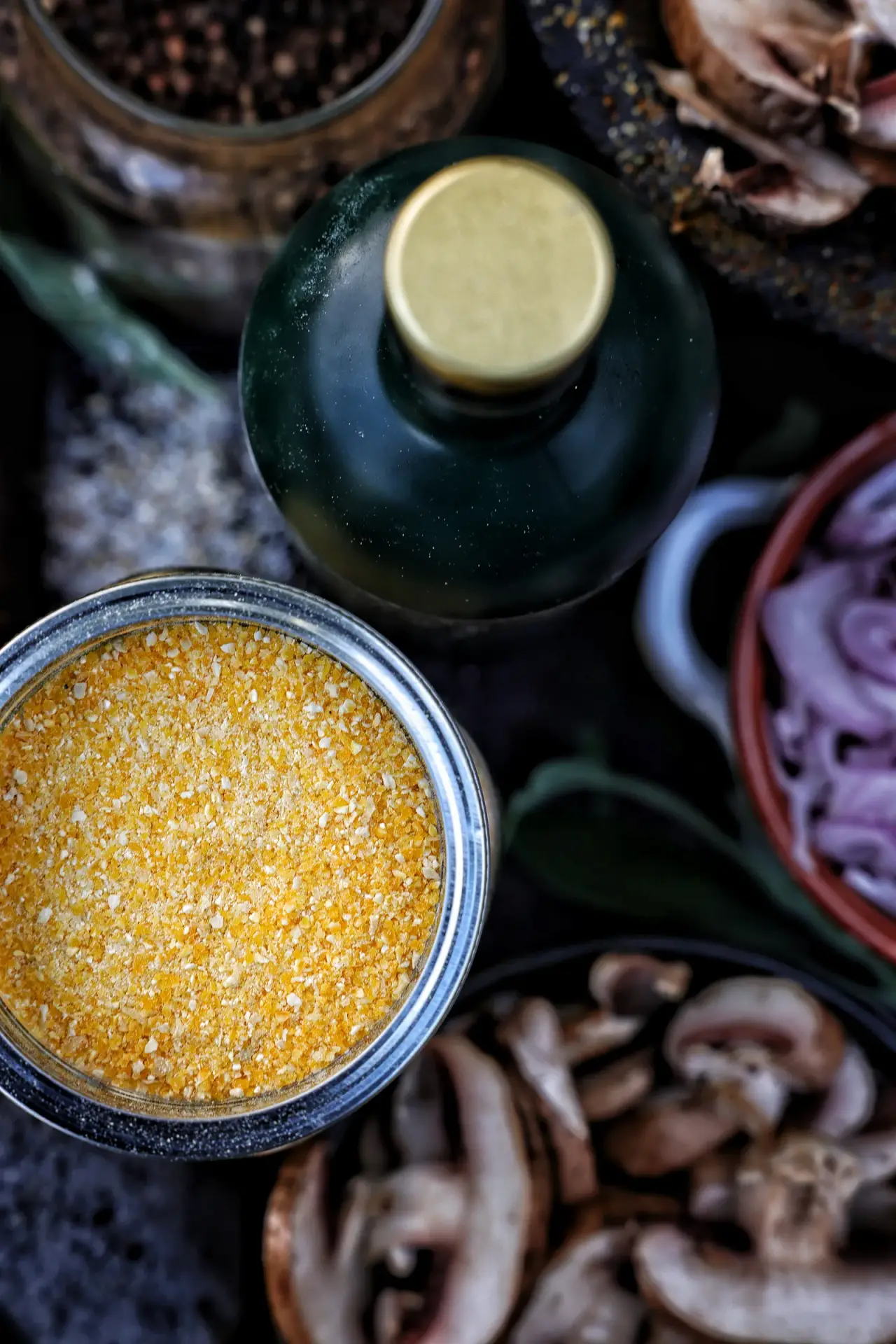
Start with coarse-ground polenta slowly simmered in chicken stock and heavy cream. The goal is a creamy, spoonable texture that still has a little body. Depending on the grind, plan on approximately 30–40 minutes of gentle cooking, stirring regularly and adding a little warm stock or water whenever necessary.
While the polenta cooks, prepare the vegetables in a heavy cast-iron skillet. Begin with the mushrooms, giving them enough heat and space to release their moisture and develop golden edges. Once they’ve browned, add butter and allow it to develop a nutty aroma before introducing thinly sliced shallots, garlic, fresh asparagus and chopped herbs.
The asparagus should remain tender-crisp, while the shallots soften and the mushrooms absorb the browned butter. Finish with lemon juice, kosher salt and black pepper.
Fold most of the sautéed vegetables into the warm polenta, allowing the browned butter to carry their flavor throughout the dish. Reserve a portion for plating alongside the salmon.
The combination works because the ingredients each contribute something different. Polenta brings creaminess, mushrooms add earthy depth, browned butter provides toasted richness and asparagus introduces freshness and texture.
It’s substantial without needing to be particularly heavy, and it makes excellent use of ingredients readily available during a Northern Michigan fall.
Coarse-ground polenta is the other half of the plate — it just needs time, stock and that browned-butter mushroom mixture.
Getting the Timing Right at Fish Camp
Cooking an entire meal over charcoal is considerably easier when you establish the order of operations before lighting the fire.
Start the polenta first. It’s the longest component and benefits from slow, gentle cooking. While the cornmeal simmers, prepare the mushrooms, asparagus, shallots and garlic, keeping the vegetables separate until you’re ready to fold them together.
Next, establish the charcoal fire and season the salmon. Once the coals are ready, finish the mushroom mixture, adjust the polenta and keep both warm while the fish cooks.
The salmon should be the last major component to come off the grill.
This keeps the fish fresh and hot without forcing you to rush the polenta or reheat the vegetables. Finish the salmon with garlic-herb butter, spoon the polenta into shallow bowls and serve immediately.
It’s a practical way to manage a fish-camp meal without needing every burner, skillet and grill surface operating at full capacity.
And it leaves a little time to enjoy the afternoon instead of spending the entire thing washing dishes.
If you want to see a Great Lakes salmon hook-and-cook from the LFR kitchen, this film is a good place to start. It’s a related live-fire cook, not a video of this exact plate.
The Best Part of Fish Camp
Fishing and cooking have quite a bit in common. Both reward preparation, patience and paying attention to what’s happening in front of you. Conditions change, plans don’t always work out, and sometimes the best approach is simply making the most of what the day gives you.
This meal is a good example.
A fresh King salmon, a few seasonal vegetables, a pot of polenta and a steady bed of charcoal. Nothing particularly extravagant, but all the ingredients for an excellent dinner.
The fish is the centerpiece, certainly. But the part I enjoy most is the entire process surrounding it: spending the morning on the river, preparing the catch, getting the fire established and bringing everything together at camp.
A meal well earned, and a good reminder that the best part of fishing has very little to do with the catch itself.
—Cheers, David @LiveFireRepublic
This is the part that stays with me: a morning on the water, and a King salmon coming to the net.
5 Best Side Dishes for Grilled King Salmon
The salmon and brown butter polenta already make a complete meal, but if you’re cooking for a larger group or building out a full fish-camp dinner, these five seasonal sides complement the fish without adding unnecessary complexity.
1. Santa Maria-Grilled Delicata Squash with Sage Butter & Toasted Pecans
Slice delicata squash into thick rings, brush with olive oil and grill over the Live Fire Republic x The Burn Shop Santa Maria Grill Attachment until lightly caramelized and tender. Finish with warm sage butter, toasted pecans and flaky sea salt. The squash’s natural sweetness complements the aromatic salmon seasoning, while the toasted pecans add welcome texture.
2. Ember Craft Bourbon Maple-Glazed Carrots with Whipped Goat Cheese
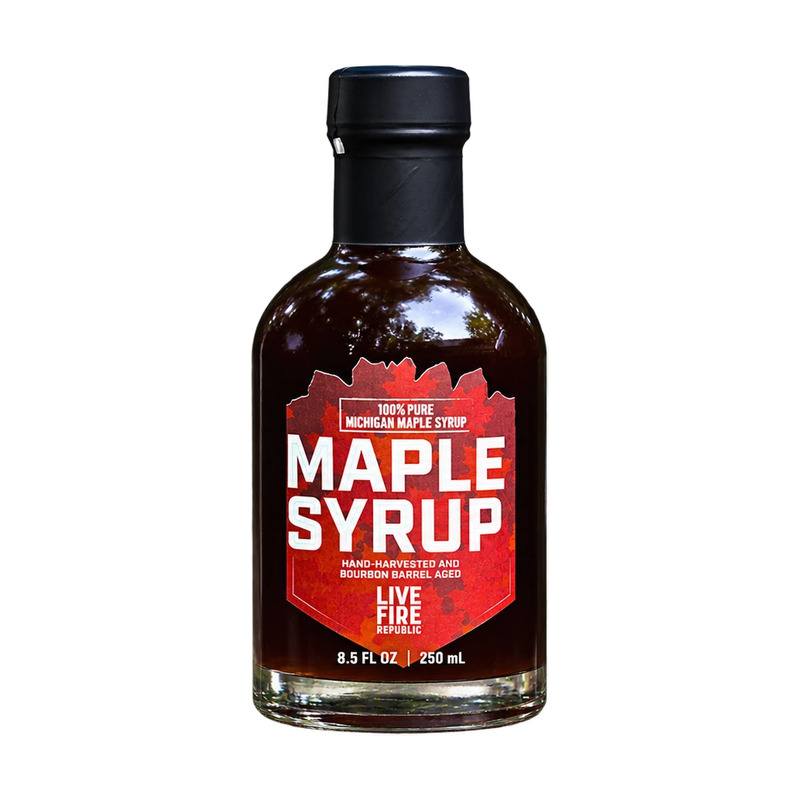
Roast young carrots over indirect charcoal heat until tender, then brush lightly with Ember Craft Bourbon Maple Sauce during the final minutes. Serve over whipped goat cheese with toasted pistachios, fresh thyme and lemon zest. The combination of sweetness, acidity and smoke works particularly well alongside rich salmon.
3. Charred Broccolini with Ember Craft Smoked Yamato Soy & Crispy Garlic
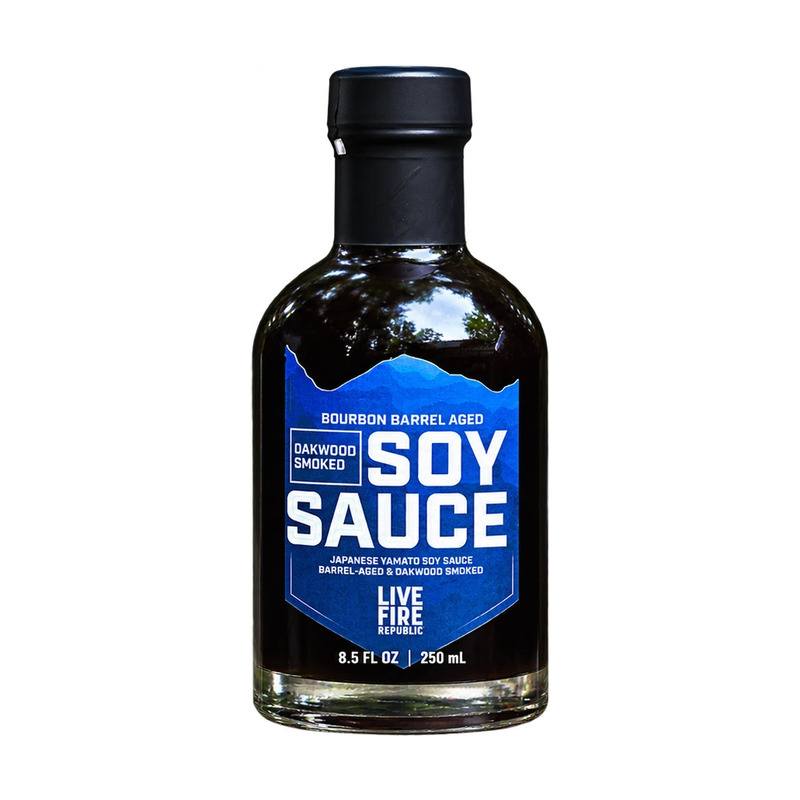
Grill broccolini over hot charcoal until the stalks become tender and the florets develop lightly charred edges. Finish with crispy garlic, toasted sesame seeds, lemon and a few drops of Ember Craft Bourbon Barrel-Aged & Oakwood Smoked Yamato Soy Sauce. It’s a straightforward vegetable side with enough savory character to stand beside the fish.
4. Fire-Roasted Beet & Northern Michigan Apple Salad
Roast golden and red beets beside the coals until tender, then peel and slice. Toss with crisp Northern Michigan apples, peppery arugula, toasted walnuts and apple cider vinaigrette. Fresh, earthy and pleasantly acidic, it’s an excellent contrast to browned butter and creamy polenta.
5. Cast-Iron Wild Rice with Roasted Garlic & Leeks
Simmer Michigan wild rice until tender, then toss in cast iron with roasted garlic, softened leeks, parsley and fresh thyme. Finish with a little browned butter and cracked black pepper. Nutty and satisfying, wild rice makes an excellent alternative to the polenta when you’re feeding a crowd.
Best Michigan Beer, Wine & Bourbon Pairings
For a Northern Michigan fish-camp meal, I like keeping the pairings close to home. The salmon’s rich texture, browned butter, mushrooms and warm spices call for drinks with enough character to complement the food without taking over.
Best Craft Beer Pairing
Short’s Brewing Company Local’s Light | Bellaire, Michigan
Short’s Local’s Light is a crisp, clean American lager brewed in Northern Michigan using traditional Pilsner malt. Its light body and gentle malt character make it an excellent partner for charcoal-grilled King salmon, allowing the fish and aromatic seasoning to remain front and center. The refreshing finish is particularly welcome alongside rich browned butter and creamy polenta.
Best Wine Pairing
Chateau Grand Traverse Dry Riesling | Old Mission Peninsula, Michigan
Chateau Grand Traverse Dry Riesling brings bright acidity, fresh citrus and the clean character associated with Northern Michigan’s cool-climate vineyards. The wine’s freshness balances the richness of King salmon and creamy polenta, while its subtle aromatics complement the cardamom, allspice and fresh herbs. Serve well chilled.
Best Spirit & Signature Cocktail
Traverse City Whiskey Co. XXX Straight Bourbon | Traverse City, Michigan
Traverse City Whiskey Co. XXX Straight Bourbon brings a classic American bourbon profile, with oak, caramel and warming spice that complement the nutty character of browned butter and the aromatics used on our grilled salmon. Rather than pairing it neat with the fish, I prefer working it into a lighter, citrus-forward cocktail that provides a little contrast to the richness of the dish.
Suggested Cocktail: Northern Michigan Apple & Sage Bourbon Smash
- 2 oz Traverse City Whiskey Co. XXX Straight Bourbon
- 1 oz unfiltered Michigan apple cider
- ½ oz fresh lemon juice
- ¼ oz maple syrup
- 3 fresh sage leaves
- 2 oz chilled sparkling water
- Apple slice and fresh sage, for garnish
Lightly muddle the sage leaves with lemon juice and maple syrup in a cocktail shaker. Add bourbon, apple cider and ice, then shake until chilled. Double-strain into a rocks glass over fresh ice and top with sparkling water. Garnish with a thin apple slice and fresh sage.
The apple and lemon bring freshness to the rich salmon, while bourbon’s oak and warming spice complement the browned butter, mushrooms and aromatic seasoning. It’s a Michigan-inspired cocktail that makes sense at fish camp without overwhelming dinner.
If you want to follow the cooks, and the days on the water that lead up to them, start here.
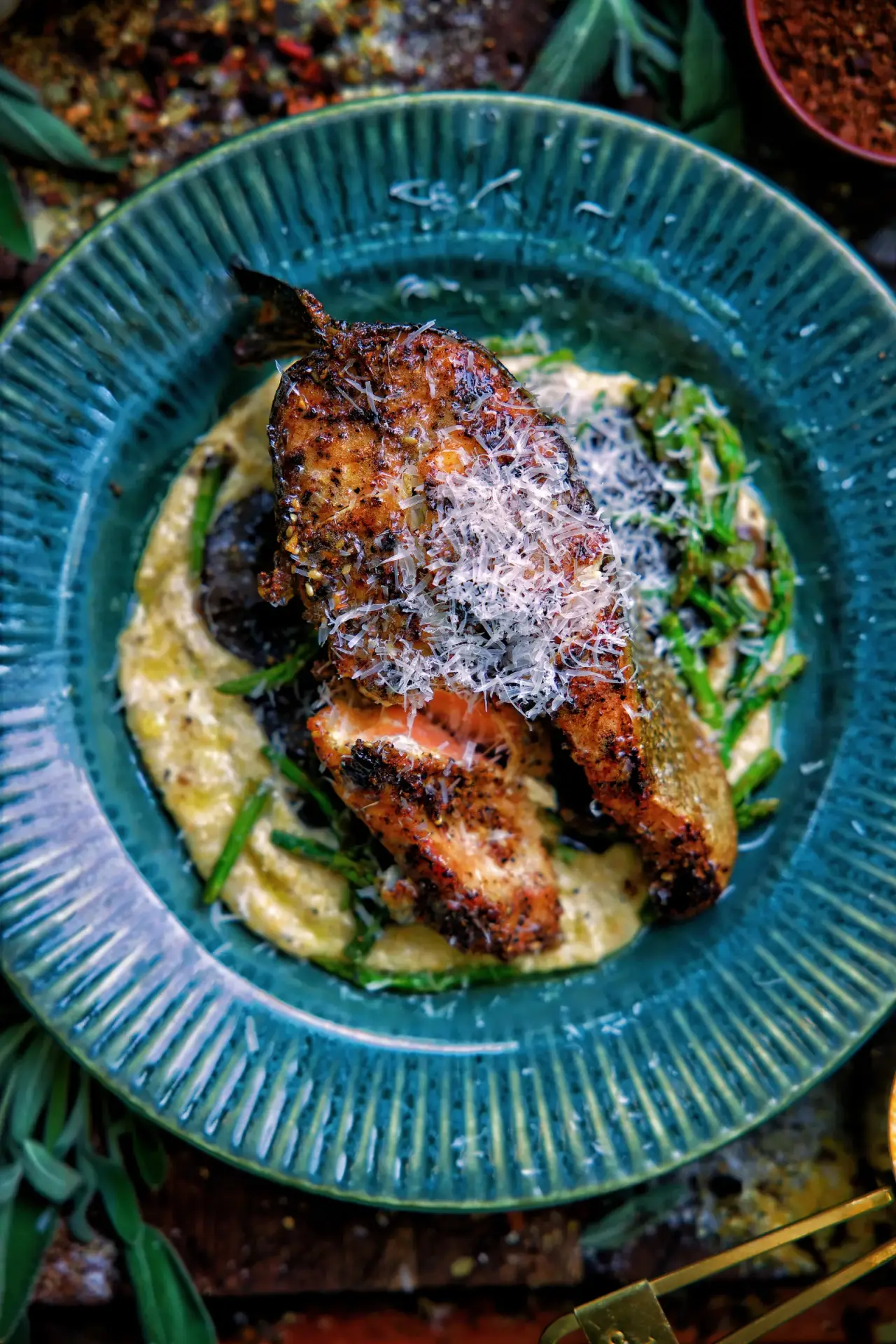
That’s the whole idea: charcoal-grilled King salmon over browned-butter mushroom and asparagus polenta, finished with a little Parmesan and lemon.
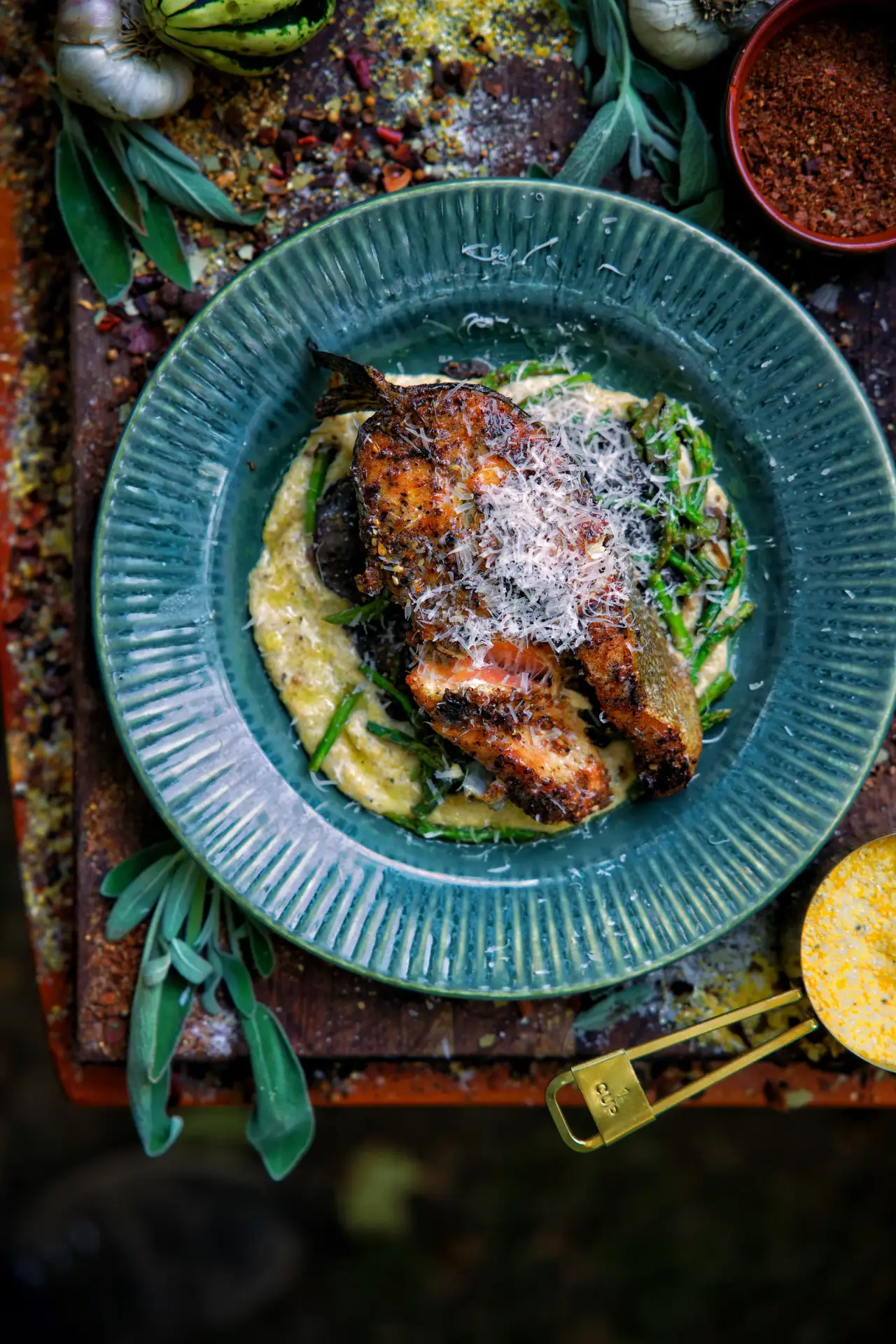
Fresh-caught King salmon. Brown butter polenta. A steady bed of charcoal.
That’s fish camp.
The Fire’s Just Getting Started
A good day on the water deserves a good meal back at camp. Whether we’re fishing Northern Michigan rivers, grilling in the backyard or cooking somewhere farther down the road, the approach is pretty much the same: start with great ingredients, build a proper fire and enjoy the experience.
At Live Fire Republic, you’ll find live-fire recipes, outdoor cooking techniques, fishing adventures and culinary experiences built around getting outside and making something worth sharing. For more fish cooked over the fire, start with our seafood recipes.
Explore the recipes, follow along on Instagram and join us wherever the next adventure takes us.
—Cheers, and long live the adventure, David @LiveFireRepublic
Complete Recipe: Fish Camp King Salmon with Brown Butter Mushroom Polenta
Equipment
- Santa Maria-style grill or conventional charcoal grill
- Kingsford Original Charcoal Briquets
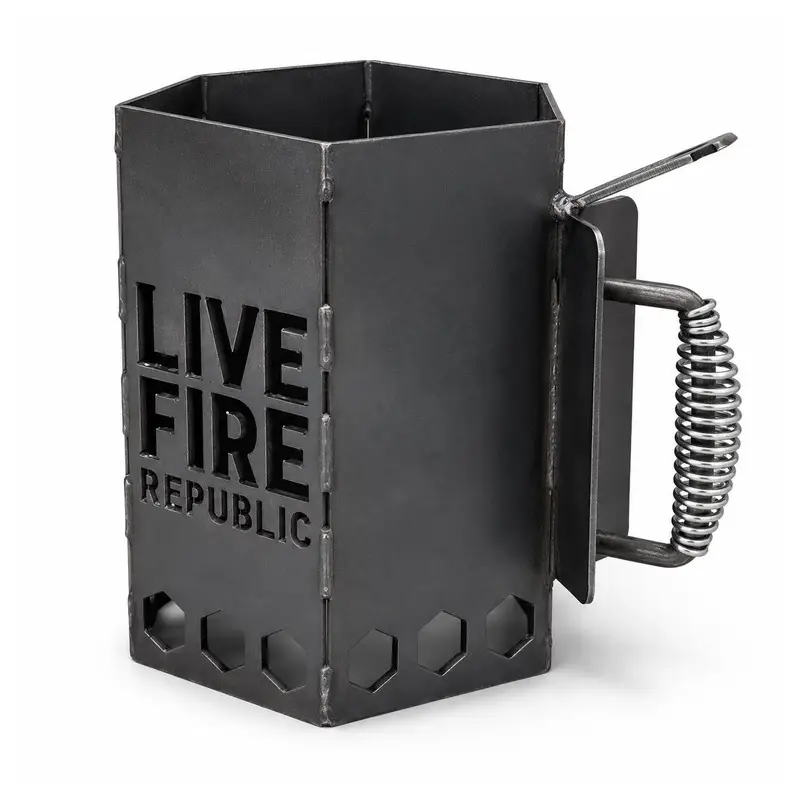
- Chimney starter (we use the Live Fire Republic Carbon Steel Charcoal Chimney)
- Cast Iron Skillet
- Heavy-bottomed saucepan
- Fish spatula
- Instant read thermometer
Ingredients
Charcoal-Grilled King Salmon
- 4–6 thick King salmon steaks approximately 6–8 oz each
- 2 tbsp olive oil
- 1½ tsp kosher salt or to taste
- 1 tsp cracked black pepper
- ¼ tsp ground star anise
- ¼ tsp ground allspice
- ¼ tsp ground cardamom
- 3 tbsp unsalted butter
- 2 garlic cloves lightly crushed
- 2 sprigs fresh rosemary
- 4 sprigs fresh thyme
- 1 lemon halved
Creamy Polenta
- 1 cup coarse-ground polenta
- 3 cups chicken stock
- 1 cup heavy cream
- 3 tbsp unsalted butter
- Kosher salt and cracked black pepper to taste
- Additional warm stock or water as needed
- Freshly grated Parmesan optional
Brown Butter Mushrooms, Asparagus & Shallots
- 8 oz mixed mushrooms sliced or torn
- 1 bunch fresh asparagus trimmed and cut into 2-inch pieces
- 2 shallots thinly sliced
- 3 garlic cloves minced
- 4 tbsp unsalted butter
- 1 tbsp olive oil
- 4 fresh sage leaves chopped
- 1 tsp fresh thyme leaves
- 1 tsp lemon juice
- Kosher salt and black pepper to taste
Instructions
FIRE
- Light a chimney of Kingsford Original briquets and spread the ashed-over coals under the Santa Maria grill. Preheat the grate to 400–450°F (204–232°C), then clean and lightly oil it.
- Pat the salmon steaks dry and brush with olive oil. Season with salt, pepper, star anise, allspice and cardamom, and keep chilled until the grill is ready.
POLENTA
- Simmer the chicken stock and cream in a heavy saucepan, then slowly whisk in the polenta. Cook on low 30–40 minutes, stirring often, until creamy. Stir in 3 tbsp butter, season, and add warm stock as needed.
MUSHROOMS & ASPARAGUS
- Sauté the mushrooms in olive oil in a hot cast-iron skillet for 5–7 minutes, until browned. Work in batches.
- Lower the heat to medium and add 4 tbsp butter. Cook until foamy and nutty, then add the shallots for about 2 minutes.
- Add the asparagus, garlic, sage and thyme and cook 3–5 minutes until tender-crisp. Finish with lemon juice, salt and pepper.
- Fold two-thirds of the mixture into the polenta. Save the rest for plating.
SALMON
- Grill the steaks 3–5 minutes per side until a light crust forms, raising the grate if they brown too fast. Cook to 145°F (63°C) in the thickest part, away from the bone.
- Melt 3 tbsp butter with the crushed garlic, rosemary and thyme until fragrant. Spoon over the salmon and finish with lemon juice.
PLATE
- Spoon the polenta into shallow bowls and top with a salmon steak. Finish with the reserved mushrooms and asparagus, pepper, lemon and Parmesan. Serve hot.
Notes
- King salmon and Chinook salmon are the same species (Oncorhynchus tshawytscha). Fresh or properly thawed King salmon from a fishmonger works if you didn't catch the fish; Atlantic salmon and coho can also work, with possible differences in texture, fat and timing.
- The skin and bones help thick steaks hold together on the grill. Remove loose scales or bone fragments before cooking.
- Pair it with the Northern Michigan Apple & Sage Bourbon Smash from the post above.
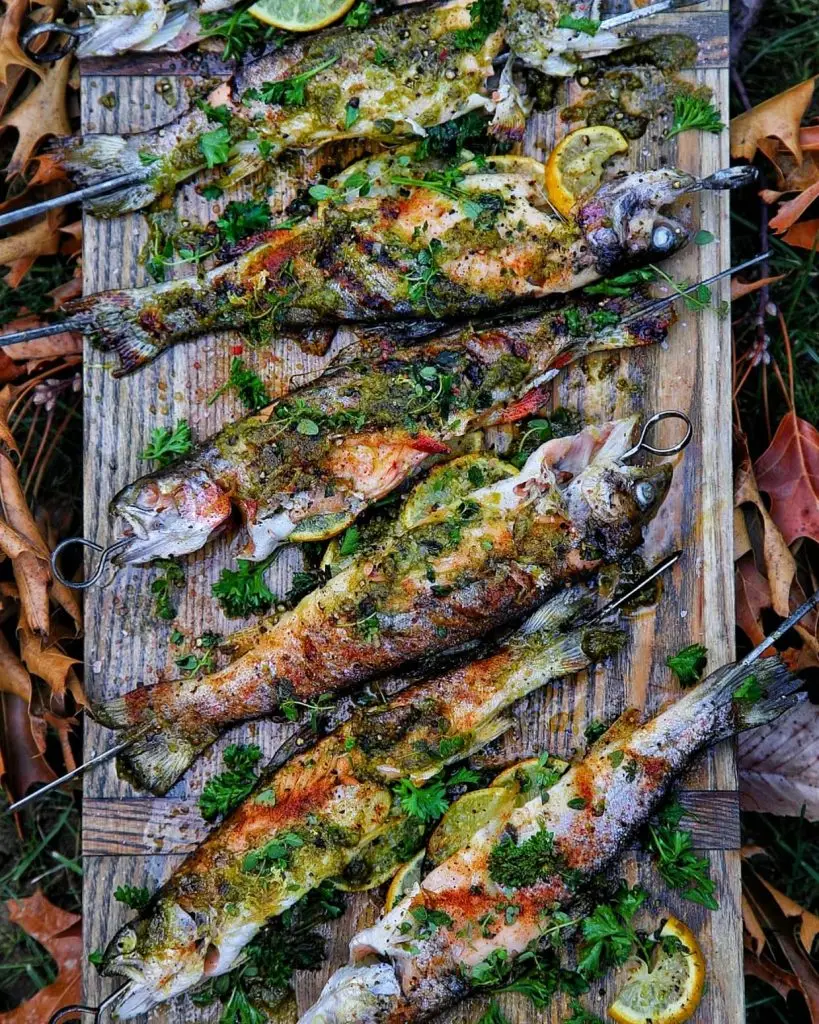
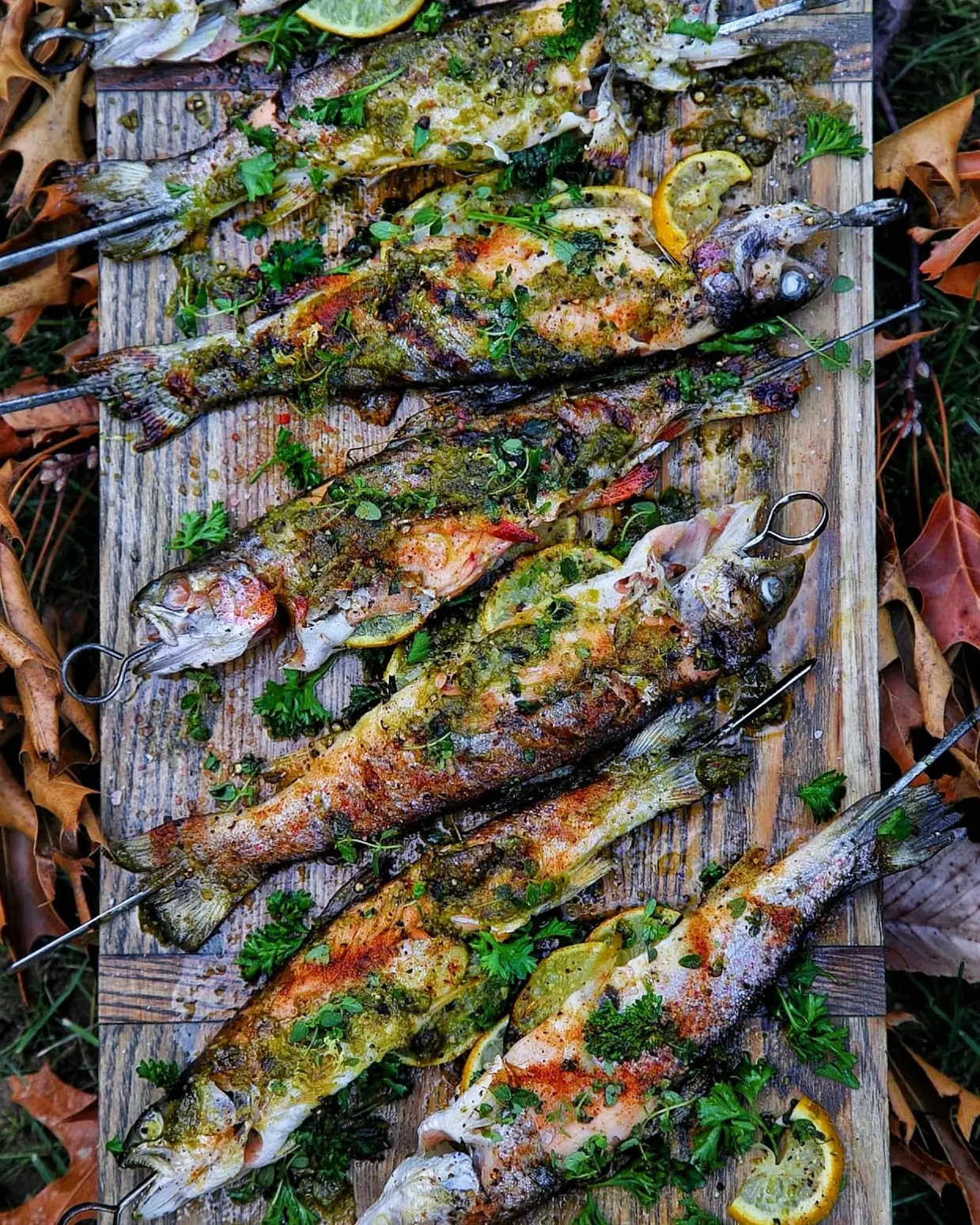 Grilled Brown Trout with Roasted Pine Nut Pesto
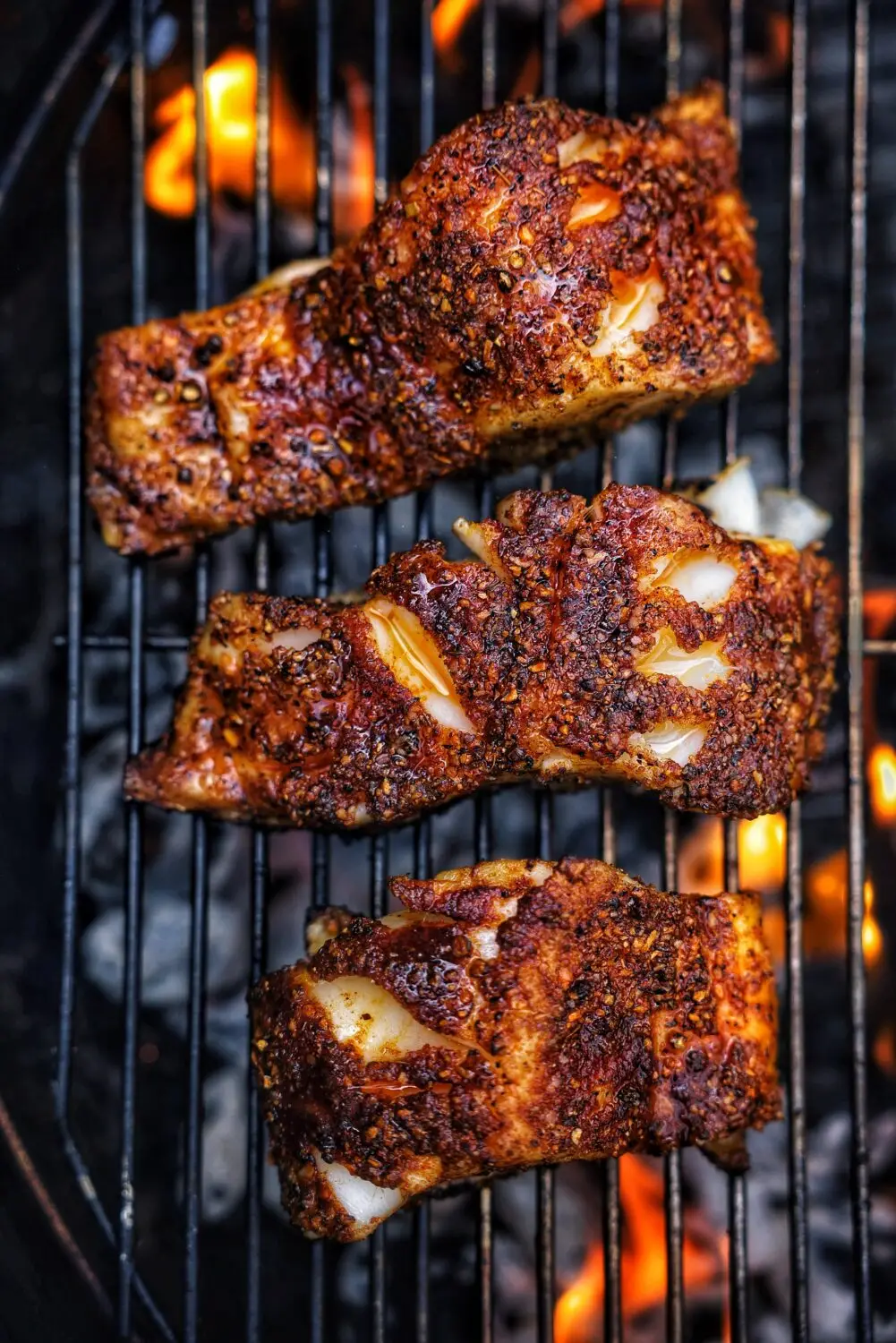 Smoked Tuscan Sea Bass
 Wood Plank-Smoked Spiny Lobster Tails